Saturday, April 6, 2013

Weekly Science Roundup #17

It's Weekly Science Roundup time! Sit back, and enjoy DEEP SPACE EXPLOSIONS, a species of turtle that never existed, and chimps thinking about thinking about bananas (no, that's not a typo).

1. Farthest Supernova Ever Seen


Supernova UDS10Wil in the CANDELS Ultra Deep Survey
Source: Hubblesite.org

Hubble has managed to out-do itself yet again. It's spotted a supernova explosion that's over 9 billion light-years away. As a reminder, 1 light-year is equal to over 26 trillion miles. Just to put this all in perspective for you.

Anyway, the reason this is so important is that the farther away something is, the older the light is reaching us. We're looking back in time 9 billion years when Hubble views this supernova. This gives us clues to the structure and behavior of the early universe.

Finding this particular type of supernova (type 1a) so early helps to determine how which version of type 1a supernovae was more common back in time--a merger of two white dwarfs, or a white dwarf feeding off a normal-sized star until it explodes. The second type can happen relatively quickly, but since there are so few supernovae that far back in time, it suggests that version of type 1a explosions is actually more rare. It's looking more and more likely that type 1a supernovae near the beginning of the universe were usually the result of two merging white dwarfs. That, in turn, is going to tell us more about the timing for the distribution of heavier elements, such as iron, in the early universe. Awesome!


2. Extinct Turtle Never Really Existed At All


A bit of good news for our second topic on the roundup: Pelusios seychellensis isn't extinct!

...It actually never was a real species in the first place.

*Cough* So this is mildy embarrassing. Turns out, the few specimens collected of mud turtle called  Pelusios seychellensis were actually from a species called Pelusios castaneus. The species that was thought to exist would've been native to the Seychelles, but instead these turtles are native to West Africa.

"In fact, for a long time researchers were amazed that the supposed Seychelles turtles looked so deceptively similar to the West African turtles. But due to the great geographic distance, it was thought this had to be a different species," explained Dr. Uwe Fritz, director of the Museum of Zoology at the Senckenberg Natural History Collections in Dresden.

The best explanation is that some hitched a ride to the Seychelles at some point, thanks to humans. It wouldn't be the first time. Last year, Dr. Fritz proved another type of mud turtle on the Seychelles was also not native to the islands, and instead there because of people. So yeah. Moral of this story: don't trust the classification of any Seychelles turtle.

On the less silly side of turtle conservation news, while it is nice to know humans are "one species less" on the list of extinctions we've caused, this isn't the time to let our guard down. Nearly 700 pig-nosed turtles were confiscated in an airport in Jakarta, Indonesia last week. These were likely heading to the pet trade, which is a major cause of trouble for many reptiles, including the pig-nosed turtle, which is listed as a species vulnerable to extinction.


3. Chimps Have Metacognition


And for our final story of the roundup, chimpanzees continue to impress. An experiment was designed to quiz chimpanzees about the type of food reward that they would receive if they answered correctly. The food was hidden, and the chimpanzees had to use information the researchers provided to determine what kind of food it was. Once they had it figured out, they would press a symbol that matched it.

Sometimes, that information was simply seeing the food item before it as hidden. But other times, the information was sorely lacking in usefulness, and the chimpanzee had no way of knowing what kind of food could be hidden. So in those cases, chimpanzees actually got up and went to take a look for themselves at the hiding spot, and then came back to report what they learned.

This might seem like a no-brainer solution to us, but just imagine for a moment asking any other animal to do this. Seriously, just think for a moment about telling your dog, "I've got a treat for you, but I'm only going to give it to you if you can point out what kind of treat it is from this giant list. And also, I'm not going to show it to you first or tell you what it is. Your one hint is that the treat is hidden in that box over there. Your move."

Maybe some of you with smarty-pants pooches are saying, "I bet I could teach my dog to do that!"...But that's just it. Chimpanzees came up with this solution on their own. They taught themselves. They are capable of seeking out further information to solve a question being posed to them at an entirely different location, with the reward only coming much later.

This type of thinking, called "metacognition", is actually most easily described as thinking about thinking. We do it all the time. It's the ability to recognize your own cognitive state, to understand that you don't know the answer, but are capable of knowing the answer if you do a bit of detective work. It goes beyond problem solving. It goes beyond tool making. This is another step on the intelligence scale that humans were fairly confident only we out of all the animal kingdom had achieved.

Nope. Wrong again, humans. Chimpanzees are so close to being on-par with us, it's almost unnerving. ...Unnervingly awesome, that is. I freaking love apes.

Sorry, that was a long third part of my roundup. My inner-physical anthropologist nerd is showing through.


Thursday, April 4, 2013

20 Years Later: Welcome (Back) to Jurassic Park

I was seven years-old. I was afraid of The Little Mermaid, All Dogs Go To Heaven, Fern Gully, and the My Little Pony movie.

But I loved, loved, LOVED dinosaurs, and I wanted to see Jurassic Park more than anything in the entire world. So after seeing the movie for themselves, my parents finally gave in. I could see the movie, on the condition that I would let them take me out of the theater if I got too scared (which they were probably betting on, given my track record).

So it was Summer 1993. I sat in the theater, getting ready to watch my first ever big-screen PG-13 thriller, wondering if it would help explain that bizarre McDonalds commercial I kept seeing on TV. Just before the movie began, my mom told me I could hold her hand if I needed to do so...

...but as it turned out, I didn't need to. For the little girl afraid of nearly every other movie ever made, I had only awe and amazement at watching dinosaurs run around eating people on the big screen in front of me. In fact, it was my mom who grabbed my hand during one particularly jump-worthy scene (even though she'd already seen the movie and should've known it was coming--it was when the raptor bursts through the piping after Ellie gets the power restored). She later claimed it was a preemptive hand grab to keep me from getting scared, but even at seven years-old I knew better than that. ;)

Jurassic Park instantly became my favorite movie. I was enamored. I'd been announcing my life goal of being a paleontologist since I was in the first grade, so maybe it shouldn't have been such a surprise to anyone that to me, Jurassic Park wasn't scary. It was fascinating. I remember a conversation in the schoolyard as a kid, where I was explaining to people why I wasn't scared of the dinosaurs in Jurassic Park. "Dinosaurs are just animals, and they need to eat. That's not scary." (Octopus-women who grow gigantic and laugh ultra-evilly, though...that's a whole 'nother story.)

I couldn't wait to own the movie for myself. I had to make everyone I knew watch it repeatedly, including my poor little sister who genuinely was afraid of it. I had to own the soundtrack. I had to have the posters. I had to tape record the "making of" documentaries whenever they came on TV. One year after starting piano lessons, I had to learn how to play the theme for myself, which you can watch below in all its awkward glory. And for my 10th birthday party, I had to have a Jurassic Park sleepover, complete with Pin-the-Lawyer-in-the-T-Rex's-Mouth and, of course, a late night, all-light's-off viewing of the movie (that scared the pants off some of my party guests).


Long story short, tomorrow night I get to see this movie in theaters for the first time since that original, magical experience. I'm even going to put up with 3D, which I can't stand, just so I can get the full IMAX screen.

Through the years, my love of Jurassic Park hasn't diminished one bit. I'm lucky to have found a whole clan of people through my job who also obsess over this movie, and we annoy everyone else in the office by quoting it incessantly. 

But I think the pinnacle of my Jurassic Park fan-life was made just this past month, at my museum's Dinosaur Day symposium.

I'd spent two year's putting this event together, and we had many fabulous paleontologists attend. The biggest name, though, was Jack Horner.

Jack Horner was one of the consultants for Jurassic Park, and it's said that Dr. Grant was partially based off of him. This guy was basically one of my childhood heroes, and not only did I get to work with him, something pretty amazing happened at the dinner event that marked the end of the symposium.

Jack Horner was saying a few words to all the dinner guests about how they're working on genetically reverse-engineering chickens to look more like classic dinosaurs. A person at one of the dinner tables near the back asked what he planned on doing with these engineered dinosaurs. My co-organizer, who was sitting next to me at the table closest to Dr. Horner's podium, shouted, "Theme Park!"

Jack replied, "I don't know. Where would I put it?"

And, without even missing a beat, in front of a room full of VIPs, scientists, and the president of my museum, I burst out with: "On an island off the coast of Costa Rica!"

And Jack laughed. And I laughed. And then I'd realized I'd just cracked a Jurassic Park joke with Jack Horner, and I had to make sure I wasn't dreaming. Most of the room had zero idea why we were laughing, but I didn't care. The seven year-old me had just attained ultimate wish fulfillment, and that was all that mattered.

So I think I'm ready. It's been twenty years. In that time, I've been a paleontologist, I've dug up fossils, I've become our museum's go-to dinosaur girl, and I've even worked with Jack Horner himself. Seven year-old me would be delighted beyond comprehension to have known all of that was in my future.

And, as cheesy as it sounds, I just can't help but wonder if any of this would've happened to me if it wasn't for this epic movie. Would I have taken the same path? Would I be a different person today?

I guess I'll never really know. Maybe I should just listen to Ian Malcolm and trust that life...finds a way.


Saturday, March 30, 2013

Easter Platypus?

With Easter tomorrow, there are images of bunnies and eggs pretty much everywhere you look right now. And while many of these images are adorable beyond words...they make zero sense scientifically.

As a fan of adorableness and a fan of science, this has me torn. So I thought, for Easter, why not do a blog post with adorable pictures AND actual science? Best of both worlds!

Now, I'm sure everyone has some familiarity with why rabbits and eggs are used as Easter symbols. Springtime, fertility, yadda yadda yadda...I'm not going to rehash the quirks of Christian holidays and symbolism here. Instead, let's talk about the biology of these fuzzy, floppy-eared lagomorphs, and the dinosaur eggs we love to artificially dye and shove in pictures with them!

Now, rabbits do actually have eggs. Just like we do. But their eggs, like ours, aren't exactly large and don't have shells that we can dye fancy colors. They're kept internally, waiting for the male equivalent to come along.

What we usually think of as an egg is actually an unfertilized chicken egg, laid by a hen in a controlled environment. Or maybe you're more of a naturalist, and the first thing that comes to mind is a nest full of blue robin eggs. Regardless, I'm guessing when you hear the word "egg", you think of a bird egg. And that's fine! Bird eggs are eggs, after all. However, sometimes it can be fun to remember that eggs come in many shapes and sizes.

Fish and amphibians lay eggs that are squishy, like jelly, to allow water to seep in and out. Reptiles have a shell on their eggs. It's usually soft, but it serves its purpose--it allows for nutrients and water to be held inside the egg without getting out, and keeps the egg from needing to be laid in water. Dinosaurs have hard shell eggs, which allows for greater protection (especially when you consider the sheer size of some of the dinosaurs that would've been sitting on their nest!). Birds, which are dinosaurs themselves, have this type of egg as well. And it is this type of egg we associate with Easter.

Rabbits, on the other hand, are lagomorphs--a special type of mammal that generally is herbivorous and has four ever-growing incisors. They're well nestled in the family tree of placental mammals, making their eggs completely internal, as mentioned before. Definitely not what we think of when with think of the Easter Bunny and its basket of eggs. However, there are mammals that do actually lay eggs! Namely, the platypus and the echidna.

So what about the eggs of those odd mammals? Well, unfortunately for Easter egg hunt enthusiasts, platypus and echidna eggs most closely resemble soft-shelled reptile eggs rather than hard-shelled dinosaur eggs we generally stick with our rabbits for Easter pictures. Not exactly things we could dye and hide safely.

So what does this all mean?

It means that our Easter symbolism is a little wonky. The eggs we use with our rabbits are actually from an entirely different group of animals. If you wanted to get more accurate, you could use actual rabbit eggs, but they would be impossible to find on an Easter egg hunt, since they'd be microscopic. If you didn't care that it was specifically a rabbit ringing in the holiday, and just wanted a fluffy creature with large enough eggs to see, you could use an echidna or a platypus as the symbol instead. However, their eggs aren't hard-shelled and wouldn't dye as easy. Not to mention those animals live in Australia, where the seasons are opposite ours and therefore this "Spring" ritual would be entirely in the wrong time of year.

Moral of the story: Easter symbolism doesn't make a lot of scientific sense, and there's no easy way to make it more logical. But shh! I won't tell if you enjoy your adorable bunny pictures and have a Happy Easter anyway!


Monday, March 18, 2013

Childhood Revisited

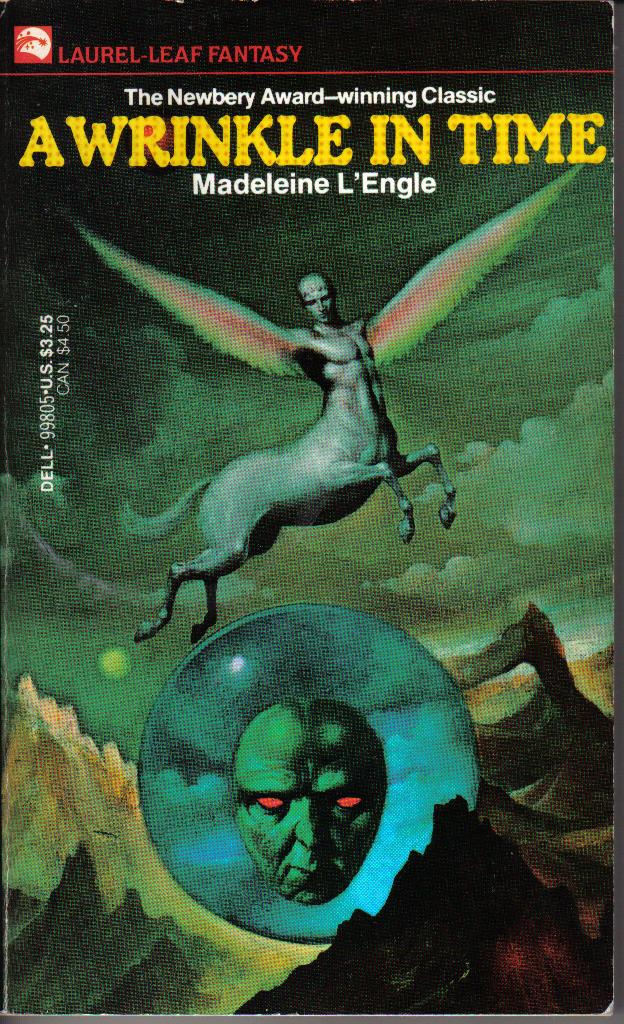
Sarah Guillory has been running a blog series called "Childhood Revisited" on her blog this month, and it's a lot of fun. She's asking writers to read one of their favorite books from their youth and review it, thinking especially about how it shaped them and their writing.

I got to participate as a guest blogger, and you can find my review on her site here: Katie reviews A WRINKLE IN TIME.

Go check it out when you get a chance! And make sure to visit her other posts, and keep an eye out for Sarah Guillory's debut YA novel, RECLAIMED, coming in October this year!

Saturday, March 16, 2013

Weekly Science Roundup #16

Whoa, a Weekly Science Roundup? When was the last time I did one of these?

Well, today I actually managed to have some time to get one of these together. Also, a lot of neat stuff's been happening this week, and I didn't want it all to go by unrecorded on here. I'm hoping to get back into these more regularly, but I can already say that next weekend, I won't be writing one. That's because next weekend I'll be here: the Boston Museum of Science's DINOSAUR DAY.

Anyway, on with the Roundup!

1. Higgs Boson Confirmed-ish

 
Last year, scientists discovered a particle which seemed to match the elusive Higgs boson, but it wasn't completely proven.

Now, after further experimentation, scientists are at least comfortable saying that this particle is a Higgs boson of some kind. Apparently, there are possibly many types of Higgs bosons. They're confident that they have some sort of Higgs boson, because the continuing tests show this particle has no spin and also has positive parity, both key traits of the Higgs boson. But whether it is the Higgs boson of the Standard Model remains to be seen. There are other ideas out there that go beyond the Standard Model. This is all news to me, and I'm still working out how to wrap my brain about it to explain it to anyone reading this blog.

To find out if it fits with the Standard Model, scientists will need to measure the rate that this particle decays and compare it to the predictions of the model. However, detecting a Higgs boson, as evident from how long it took just to discover the trace of one last year, takes a lot of time and effort. Moral of the story: it'll probably be a while before it's confirmed if this particle fits the Standard Model. But this is still a really cool step in the right direction.


2. Burgess Shale Fossil Pushes Acorn Worm Evolution Back 200 Million Years


Spartobranchus tenuis is a newly discovered fossil from the Burgess Shale and just reconfirms my love for that formation. Seriously.

This new worm-like critter is soft bodied, so finding it in fossil form is impressive enough, but to actually take a lineage and push it back in time 200 million years...wow. Just think about that for a moment. Acorn worms are alive today, like primates. Primates originated around 60 million years ago. Imagine if we said, oh, primates were actually around 260 million years ago, not just 60 million years ago.

Anyhow, now that I'm done geeking out about how awesome the Burgess Shale is, let's go ahead an acknowledge that these things look yucky. Like it or not, they play a crucial role on the evolutionary tree. They aren't that far removed from the phylum Chordata, which is our own animal lineage. Being Hemichordates, acorn worms often come with a neural tube, which in Chordates, is the precursor to our central nervous system.

This fossil links two subsets of Hemichordates-- the Enteropneusta and the Pterobranchia. It answers long-held questions of their relationship, and sheds light on early animal evolution. Burgess Shale, you just continue to be awesome.


3. Chemical Fingerprints of Distant Solar System Detected for First Time


Using spectral imaging, astronomers have been able to learn the composition of the atmosphere of four exoplanets orbiting a dusty star, all at the same time.

Thanks to the Hale telescope and Project 1640, we've been able to learn about four planets all in one go, which is unprecedented. What was discovered is that all four planets are far too toxic to support life as we know it, and may actually be quite red in appearance. It also found that each of them was very different from one another, so there's a lot of work to be done to figure out why that might be.

In related news, one of the four planets was also recently imaged in insane-detail with spectroscopy on its own, by use of the Keck II telescope and the OSIRIS spectrograph. It revealed that this planet has a carbon to oxygen ratio that matches what we'd expect from a core-accretion-style solar system formation (the same model we hypothesize for our own solar system). Since it behaves somewhat similarly to our own solar system, save for having large planets, many scientists refer to it as a "scaled-up" version of our system.

With these improvements in detection methods, we should soon be able to start examining rocky planets orbiting other stars to determine if they are capable of sustaining life.

Things are getting interesting!

Tuesday, March 12, 2013

It's Official: Mars Could Have Once Had Life

"A fundamental question for this mission is whether Mars could have supported a habitable environment," said Michael Meyer, lead scientist for NASA's Mars Exploration Program at the agency's headquarters in Washington. "From what we know now, the answer is yes." - NASA, 3/12/13

Curiosity, way to do your job like the amazing robot you are. There's a reason I love you so much.

Last August, we sent Curiosity to Mars with several missions--the main one being to determine if Mars had ever been habitable.

Image credit: NASA/JPL-Caltech/MSSS
Today, thanks to that awesome-tastic rover working just like we'd hoped, we have confirmation that it was.

Curiosity sampled sedimentary rock in the Gale Crater, drilling in to get a fine powder to analyze. A fine, grey powder. Not red.

Intriguing. At least, if you know that the grey powder indicates only partially oxidized chemicals, which were then confirmed upon the actual analysis. What does this mean, for non-science people? This means there could have easily been stuff for microbes to get energy from, such as sulfates. Microbe food, so to speak.

Curiosity has also demonstrated that the soil there isn't particularly acidic or salty, either. In fact, it's pretty much confirmed that the ancient streambed Curiosity's been visiting was a freshwater stream.

Sulfar, nitrogen, hydrogen, oxygen, phosphorus, and carbon have all been identified in this sample, which are all ingredients for life. Add that to the surprisingly un-harsh ancient environment of this streambed and the energy resources, and there you go: Mars officially had a point in its history where it would have been quite friendly to microbial life.

This means Earth was not alone in its raw potential for evolving life. Our neighboring planet could've done it, too.

Holy moly, the universe is freaking amazing. *FLAIL OF AWESOME*


Saturday, March 2, 2013

Comet Coming for Mars

Okay, so this blog is rapidly becoming rather space-focused of late. I blame that on two things--my work-in-progress sci-fi novel directing my attention towards astronomy news, and also just the fact that a lot of freaking cool space stuff has been happening lately.

So here's the dealio. There's a comet that will come pretty close to Mars in October 2014. By "pretty close", I mean there's actually a real chance it might smash straight into Mars.

Let that just sink in for a moment (no pun intended).

There's a comet. It's likely somewhere between 10-30 miles in diameter. It's heading towards Mars. Its current icy form (being a billion miles from the Sun) may alter as it gets closer to the Sun. It may alter so much (by venting off gas), that instead of missing Mars (which it would by about a distance of 23,000 miles on its current trajectory), it could hit the red planet in an apocalyptic impact that would cause an explosion 25 million times larger than any nuclear weapon we've ever set off here on Earth.

Whoa.

Image Credit: NASA/JPL
Odds are, it won't hit Mars. But even if it misses, the comet's "coma" (its field of icy, dusty debris that surrounds it as it sails through the solar system) may still hit Mars. In fact, the odds of the coma hitting Mars are pretty decent. Mars will likely get pelted with a meteor-shower-to-end-all-meteor-showers, at the very least.

So what does this mean for us?

Well, the good news for Earth is that there's zero chance of this hurting us here.

The bad news is that our Mars rovers and satellites may end up in serious danger.

Nooooo, Curiosity!!!
The worse news is that if the comet does hit, any potential life on Mars would likely be wiped out. So there goes discovering any alien neighbors.

So.

As cool as a comet slamming into Mars would look, I'm personally hoping for a nice wide miss. I'm going to be pretty heartbroken if Curiosity ends up failing because of this comet. And my personal, deep-hope of finding life on Mars would be shattered if this collision did come to pass.

You hear that, Comet C/2013 A1? You stay away from my second favorite planet if you know what's good for you! *shakes fist at ice-ball one billion miles away*


PS: Weekly Science Roundups shall return, I promise. My writing life has just gotten pretty swamped lately, so I'm prioritizing!