This might be my most personal blog post ever, but I want to talk about why I've made the choice to have girls as the protagonists of my novels.
Growing up, I loved adventure stories. I was obsessed with Star Wars, could recite Jurassic Park front to back, plowed through every fantasy book series I could get my hands on, and daydreamed about the day I'd get to go on my own epic quest. I listened to John Williams soundtracks on repeat, and when Harry Potter hit, I dived into that with wild abandon.
The stories that meant the most to me all had male leads. Girls had varying degrees of prominence, but were almost always there to supply a romantic interest for one of the main male characters. None of them were ever the focus of the adventure. They were never the "chosen one". Never the central character who everyone rallied around. They just weren't.
As I was internalizing the female role of being a sidenote to the male, I was barreling through my teenage years, being told I needed to start wearing makeup and sexier clothes because getting a boy's attention was of top priority. My nerdy side was not attractive, and as I was reminded over and over, I needed to hide what I was really interested in if I ever wanted a date.
But I didn't want a date, I wanted an adventure! The combination of societal pressures and the fictional worlds I practically lived in told me that I was supposed to want romance. Duh, I was female, that's our entire focus, right? But this just confused the hell out of me. I couldn't bring myself to care about any of the things I was meant to care about, and no amount of faking it could hide the real me.
On top of not caring that much about boys, I hated shopping, I hated smelly fragrances, I hated dresses, and I hated gossip. And I decided girls who DID like these things were the problem. Because of them, I had the entire world telling me I was supposed to be someone I just wasn't.
I put girls in a box. All of them. "Girl" became a label that meant something flighty, stupid, and shallow. I was furious when someone would try to label me as one. It got to the point in college that I refused to call myself a girl. Flat out refused. Being a girl was the most insulting thing I could think of to be. It disgusted me. Girls were the root of all of my problems. I wished they didn't exist.
I literally wanted to erase my sex from the planet.
When I began to seriously consider what this meant for me, I realized that while I claimed to wish I'd been born a boy, I wasn't interested in actually being a boy. I didn't feel like I was male deep down. This isn't a story about a trans discovery. What I was deep down was female, it felt female, it just wasn't what I'd internalized "female" to mean. I was better than "female".
And when I hit upon that realization, I felt sicker than ever.
What's wrong with being female? What? Why did it have such a negative connotation to me? Why was so I nauseated by my own sex?
It's still a work in progress, but from that moment on, I've begun to reclaim that identity. I am female. I'm a girl. I'm a woman. And I'm a pretty awesome person. Those shouldn't be exclusive!
No, girls never got to be the action heroes (unless they knew five martial arts, slept with a million guys and broke all their hearts, and wore skin-tight black catsuits--none of which remotely described me). Girls were scarcely in adventure stories at all, except for the token few there to provide a romantic side story. But WHY NOT?
I grew up learning that unless it was a romance story, main characters were boys. What did that say about me--the main character of my OWN life? As someone who wasn't that interested in romance, I identified with the action heroes who were always male. And this fed into my twisted view of girls, and caused a lot of self-loathing through my teens and early twenties.
That's not okay.
ANYONE should be able to see themselves of the hero of the story, without having to change a basic aspect of their identity. When I started writing seriously, I focused on the fictional girls who drove this point home. Hermione. Polgara. Mara Jade. But even they were only there as side characters.
So I made the choice to make my main characters girls. Sometimes people tell me that my writing is more of a classic "boy adventure" mold, and I should consider that in my protagonist choice.
...Trust me. I have.
That's pretty much the entire point.
Nowadays, we are getting more True Adventures starring girls, which is great. But we've got a long, long way to go. We've barely made a dent in the male-dominated hero world. Until things are 50/50, it's not good enough.
If I can save any other young girl from the deep self-hatred I felt, I feel like I owe it to her. I wish I could go back in time and tell myself that being a girl is just as cool as being a boy, but I can't.
This is why my protagonists are girls. And this is why I'm not backing down from that.
Showing posts with label Blathers. Show all posts
Showing posts with label Blathers. Show all posts
Sunday, December 14, 2014

Friday, February 8, 2013
THUNDERSNOW IS COMING

I think my greatest disappointment of the day so far is discovering that THUNDERSNOW is technically two words. But for the purposes of this blog, I will continue as if I'd never learned that little fact.
So what is THUNDERSNOW?
It's just what it sounds like: thunder, during a snowstorm. And it's pretty rare, too. Snowstorms need to be really big for thunder and lightning to occur.
Just how big?
Well, thunder happens when lightning happens. Lightning happens when a pocket of warmer, moist air has colder air pushed over it. This is a result of the turbulence experienced in storms, and when it happens, the warmer air rises up through the colder air, creating drafts.
This can usually only happen in the warmer months of the year, so to have it happen in a winter storm means the storm must be HUGE. There's no decreed size it must be, but since there's so little warm air in the winter, it's gotta be big enough for a large patch of warm air to be possible, such as in today's upcoming massive blizzard event, Nemo. Often, this can happen near oceans, where warmer air is more common in the winter months.
How does the thunder happen?
Thunder is the sound of lightning. Specifically, it's the sonic boom the lightning creates when it rapidly heats the atmosphere around it.

And when you have unbalanced charges (such as the negative base of the cloud versus the more positive top of the cloud and/or planet below), the charges balance themselves. Positive charges may move up towards the cloud, creating a burst of electrical energy that we call lightning.
Will we get THUNDERSNOW today?
That, I can't answer. Many meteorologists are predicting so, but we won't know for sure until the storm's actually happening.
I really, really hope we do, though. *geeks out*
Friday, December 21, 2012
END OF THE WORLD POST

Well, this is it, folks. The world's supposed to end today. We all know it, now we just need to sit back and wait for it to happen.
Uh...right?
Actually hold on. How do we all know the world is supposed to end on December 21st, 2012?
Some Mayan calendar thing, right?
Right. The Mayan's. An ancient civilization that knew everything about the universe and always got the answers right. Like that heart-cutting-out business. That was right on the money.
And actually...wait. Has anyone actually looked into the whole Mayan calendar thing? Are we sure they predicted the end of the world to be today? Like, really sure? Because while it is kind of rainy and windy out there, it's all in all not that bad of a day so far.
Huh. Turns out, if you take even thirty seconds to do any proper research, you'll find out that the Mayan's didn't say anything about the end of the world on December 21st, 2012. In fact, they have calendar systems that continue on for millions of years past today.
What ends today is one cycle of their b'ak'tun time measurement. This is kind of like our "century". A b'ak'tun is 394 years long, and we've gone through many of them already. Thirteen, actually, according to the Mayans. And all the past ones never gave us trouble. Is this one special for some reason?
No. Once again, the Mayans did not think the world would end at the end of this cycle. Who knows what they did think would happen, but they wouldn't have charted stuff past this date if they thought it was the end of the world. Duh. I like Phil Plait's idea that for all we know, today could've been like a Mayan New Year celebration, with parties and drinking.
So why do people think the world is ending today? Hype, mostly. Greedy television channels looking to make money (I'm looking at you, History Channel). Silly blockbuster movies. People ALWAYS want to think the time they're living in is "special" somehow, and hey, the end of all time would be a pretty special occasion.
All this day proves is that people also don't always think rationally or do their own research. This is why science education is so ridiculously, hugely important. We need to train our youth to think reasonably. To research before coming to conclusions. To test things. Our country is a laughing stock because of our general ignorance and inability to use logic.
So if this really is the start of a new cycle, like the Mayan's did predict, let's hope it's one of reason and sensibility. I'd be more than happy to see the end of the world of stupidity our culture just loves to embrace. Let's start a new era of rational thinking, please.
Also, Happy Solstice to all!

Monday, October 1, 2012
Curiosity Discovers an Ancient Streambed
There's conglomerate on Mars.
THERE'S CONGLOMERATE ON MARS, GUYS.
 In the newest update from Curiosity, they've gotten the first photographic evidence of an ancient streambed with actual rounded gravel cemented together as solid rock over time. This cemented-together gravel is known as conglomerate, and is a type of sedimentary rock that forms from river deposits.
These stones were rounded via liquid water at some time in the past, and were left behind when the river dried up. Only a quickly traveling liquid could round these stones in this way and leave them deposited in streaks like those Curiosity has discovered. Previous study from earlier rovers (Spirit and Opportunity) proved that the most common liquid on Mars in its history would've been H20, because of the mineral deposits found in the dirt on Mars. Therefore, it's almost certain that the liquid that rounded these stones was from a stream of water.
And not just any stream. Before now we just knew some water was possible some time in Mars' past. Now we know it's not just "some" water. This was a stream at least ankle deep, but possibly even knee deep in sections, and moving at three feet per second. Three feet per second! And it likely stretched on a long, long ways across the crater where Curiosity is hanging out. This was a serious stream. The thick layers of stone also suggest this wasn't a one time deal: this stream existed for a long period of time, with cycles of flooding and drying.
Wow. This is amazing.
It's been less than two months and Curiosity has already found an ancient, fast-moving stream that could easily have hosted some sort of life. However, the question of whether life was possible on Mars (which is Curiosity's most important job) is still up in the air. Curiosity has found signs of significant amounts of water, but there are many other requirements still missing.
Good thing Curiosity is designed to last at least two entire years more. I can't wait to see what she finds next.
THERE'S CONGLOMERATE ON MARS, GUYS.
These stones were rounded via liquid water at some time in the past, and were left behind when the river dried up. Only a quickly traveling liquid could round these stones in this way and leave them deposited in streaks like those Curiosity has discovered. Previous study from earlier rovers (Spirit and Opportunity) proved that the most common liquid on Mars in its history would've been H20, because of the mineral deposits found in the dirt on Mars. Therefore, it's almost certain that the liquid that rounded these stones was from a stream of water.
 |
| All photo credits to NASA |
And not just any stream. Before now we just knew some water was possible some time in Mars' past. Now we know it's not just "some" water. This was a stream at least ankle deep, but possibly even knee deep in sections, and moving at three feet per second. Three feet per second! And it likely stretched on a long, long ways across the crater where Curiosity is hanging out. This was a serious stream. The thick layers of stone also suggest this wasn't a one time deal: this stream existed for a long period of time, with cycles of flooding and drying.
Wow. This is amazing.
It's been less than two months and Curiosity has already found an ancient, fast-moving stream that could easily have hosted some sort of life. However, the question of whether life was possible on Mars (which is Curiosity's most important job) is still up in the air. Curiosity has found signs of significant amounts of water, but there are many other requirements still missing.
Good thing Curiosity is designed to last at least two entire years more. I can't wait to see what she finds next.
Tuesday, August 14, 2012
1470

This is a really big deal, guys. This is a specimen that's been argued about for decades. Now, they've found other members of its species!
 |
| 1470 (left) and 1813 (right) |
Anyhow, I demonstrated that even the most sexually dimorphic ape species didn't come close to what we'd need to assume about 1470 and 1813 to get them to belong to the same species. However, my study was just a measly undergraduate project and didn't garner any attention other than an impressed eyebrow-raise from my esteemed professor (you have no idea how much I geeked out about that eyebrow raise).
The point of sharing this story is that I HAVE BEEN WAITING A LONG TIME FOR SOMEONE TO PROVE FOR REAL THAT 1470 IS NOT HOMO HABILIS.
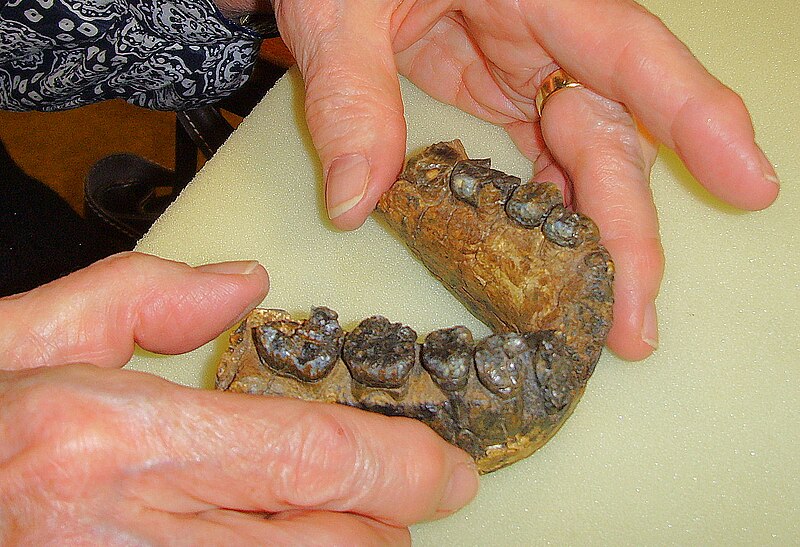
These fossils come from Koobi Fora, a site of fossil beds on the banks of Lake Turkana in Eastern Africa. This is the same place 1470 was found, and is also where specimens of Homo habilis and Homo erectus have been found. It seems likely that at least three species of early humans lived in the same place at the same time.
That's awesome.
Each was just different enough that they probably occupied different environmental niches in the same location, like modern primates do so often today. But it begs the questions...what did they think of each other? Did they interact at all?
These were early versions of us. While they didn't have complex tools or real language (we don't think), they still were smarter than anything else around them and were likely self-aware. What was that like for them? Hanging with other species of, essentially, themselves?
This is why I love paleontology. It's arguably the most imaginative of all the science fields.
Now, please excuse me while I go back to daydreaming what it would've been like to hang with all our early ancestors 2 million years ago...and congratulate 1470 in person on finally being recognized as its own species and not just a freaky version of Homo habilis.
Thursday, August 9, 2012
Science of the Olympics: Muscles
So we've seen how humans are able to run, swim, and flip about, but why can we even move our muscles in the first place? That is the subject of my final post in this Science of the Olympics series.

The Science of Muscles
Muscles work through a series of contractions. The source of energy for these contractions is a mix of oxygen, glycogen (a carbohydrate), and fat. Those things come together and react to produce ATP (adenosine triphosphate). ATP powers our muscles.
In other words, fats and carbohydrates react with oxygen to make a substance that helps energy get into our muscles.
Not actually all too complicated an explanation at first glance. I won't go into the nitty-gritty details that make it more complicated here. Just know that when you move, you can thank ATP.
 Anyhow, there are two main types of muscle fibers: fast twitch and slow twitch. What's the difference? Pretty much as it sounds. Fast twitch contracts faster, slow twitch contracts slower. In addition, slow twitch contracts for longer periods of time than fast twitch. Interestingly, endurance runners (like marathon runners) have more slow twitch fibers than fast twitch. It's not clear if humans can actually change one type of fiber into another, so it may just be that they're born with more of those fibers, giving them the ability to keep their muscles going for longer periods of time.
Lucky them!
Now, to let any of these muscles fibers work at all, we've got to get them ATP. And to make ATP, we need oxygen.
How do we get oxygen to our muscles? Our blood of course!
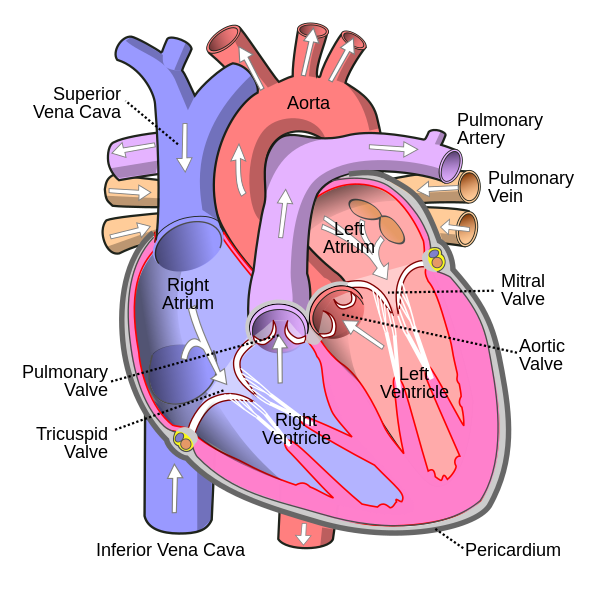 The human heart pumps, on average, five liters of blood per minute at rest. That number increases during exercise.
The heart pumps your blood in two ways. On one side, it pumps blood out towards your lungs. That blood rushes around outside your lungs, capturing oxygen from your alveoli (lung air sacs). It then takes that back to the heart. This is where the second pump comes in. This time, your heart pumps the fresh, oxygenated blood out towards the rest of your body, instead of just your lungs.
And that's how it gets to your muscles. Now, during exercise, your body tries to optimize blood flow to your muscles. That means it dilates the blood vessels in your muscles (for more blood and oxygen), increases your breathing rate and depth, and diverts blood away from places that don't need it as much (like your digestive track). Olympian bodies are doing this constantly.
 They're also pumping blood out of their hearts much faster than the average person does, and squeezing their hearts harder, too. This gets lots of oxygen to the body, but also means that the lungs have to deal with much bigger "blasts" of blood heading their way each beat. Physically fit people have lungs with blood vessels that can dilate well enough to handle the increase in blood flow safely. People who aren't as fit and try to do something active, resulting in this type of extra-blood-pumping situation, won't have vessels that can handle it. That's what causes high blood pressure.
Finally, physically fit people can take in more oxygen during each breath. Such people have more alveoli available in their lungs, thanks to (safe amounts) of increased blood pressure. That means more places to gather oxygen! More oxygen means more ATP which means more muscle energy. More energy can result in amazing things, like all the broken world records we've already seen at the 2012 Olympics.
So that's the short version of how our muscles work. It's pretty neat to think about all the wacky things that happen in our bodies every instant that we're entirely unaware of, isn't it? Especially when we realize how these little things add up to give us the ability to run, jump, and win gold medals.

Thanks for following along with me over the past two weeks as we've explored the Science Behind the Olympics! Perhaps there will be a blog series revival in 2014 with Sochi. After all, we've barely skimmed the surface of the science involved in these great games.
The Science of Muscles
Muscles work through a series of contractions. The source of energy for these contractions is a mix of oxygen, glycogen (a carbohydrate), and fat. Those things come together and react to produce ATP (adenosine triphosphate). ATP powers our muscles.
In other words, fats and carbohydrates react with oxygen to make a substance that helps energy get into our muscles.
Not actually all too complicated an explanation at first glance. I won't go into the nitty-gritty details that make it more complicated here. Just know that when you move, you can thank ATP.
Lucky them!
Now, to let any of these muscles fibers work at all, we've got to get them ATP. And to make ATP, we need oxygen.
How do we get oxygen to our muscles? Our blood of course!
The heart pumps your blood in two ways. On one side, it pumps blood out towards your lungs. That blood rushes around outside your lungs, capturing oxygen from your alveoli (lung air sacs). It then takes that back to the heart. This is where the second pump comes in. This time, your heart pumps the fresh, oxygenated blood out towards the rest of your body, instead of just your lungs.
And that's how it gets to your muscles. Now, during exercise, your body tries to optimize blood flow to your muscles. That means it dilates the blood vessels in your muscles (for more blood and oxygen), increases your breathing rate and depth, and diverts blood away from places that don't need it as much (like your digestive track). Olympian bodies are doing this constantly.
Finally, physically fit people can take in more oxygen during each breath. Such people have more alveoli available in their lungs, thanks to (safe amounts) of increased blood pressure. That means more places to gather oxygen! More oxygen means more ATP which means more muscle energy. More energy can result in amazing things, like all the broken world records we've already seen at the 2012 Olympics.
So that's the short version of how our muscles work. It's pretty neat to think about all the wacky things that happen in our bodies every instant that we're entirely unaware of, isn't it? Especially when we realize how these little things add up to give us the ability to run, jump, and win gold medals.
Thanks for following along with me over the past two weeks as we've explored the Science Behind the Olympics! Perhaps there will be a blog series revival in 2014 with Sochi. After all, we've barely skimmed the surface of the science involved in these great games.
Friday, August 3, 2012
Science of the Olympics: Legs
As track and field begins at the Olympics, the focus shifts off of the extremely flexible and switches to the extremely fast.
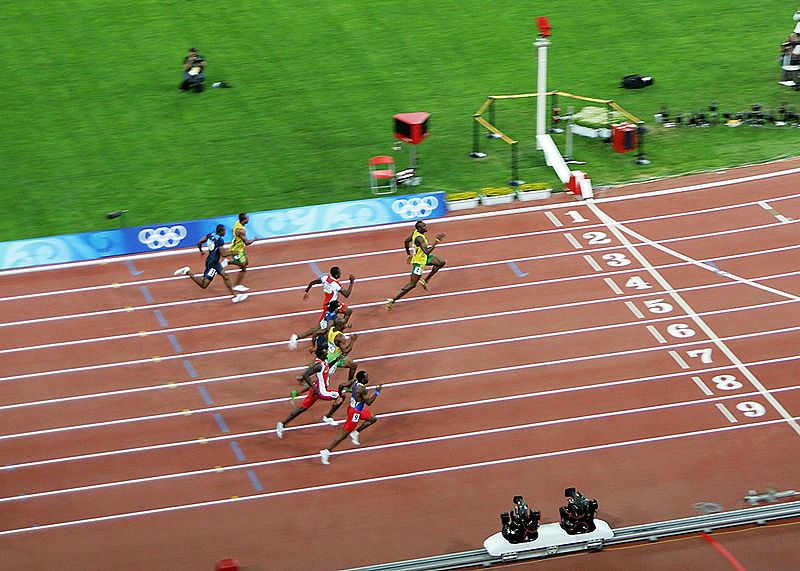
But how do we move so quickly? It all comes down to adaptations of our hind limbs, millions of years in the making.
The Science of Legs
 We take for granted our ability to move around on two legs, but it's kind of a big deal. Almost every other land animal runs on four legs, not two. I say almost, because there are notable exceptions...
But we are the only animal that runs on two legs and has no tail to act as a balancing mechanism. This requires some specialization.
Interestingly enough, it was by losing our tail that we were first able to frequently assume upright postures. All those muscles that used to control our tail were re-purposed to hold up our guts. Really.
Our pelvis sits at the bottom of our torso and without those muscles there, our guts would just fall through our pelvis. Gross, yes, but true. The muscle is what holds everything up, and we wouldn't have that if we still had those muscles going out for our tail.
(Why does that Utahraptor above not have this problem? Well, honestly, they don't stand like we do. They aren't "upright"...they don't have their pelvis rotated like ours for that problem to even exist.)
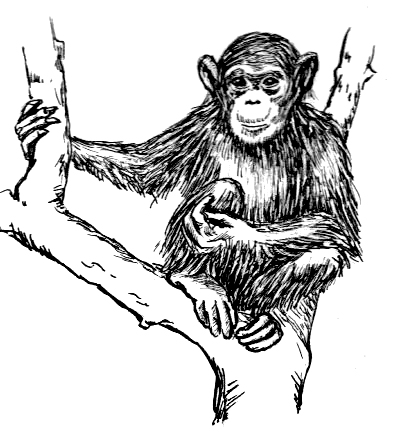 Humans aren't the first primates to have this issue. It's actually an issue for all apes. One big thing about being an ape, is that we tend to sit in upright positions, freeing our hands to manipulate objects. That's the leading theory as to why our tails shrunk up and disappeared over generations in the past.
But being upright is just step one on the way to running on two legs. Next, we had to somehow change from moving around with help from our hands, to moving solely on two feet.
Other apes walk on two feet. Some quite frequently. But no other ape can walk only on two feet all day, every day. That's the realm of humans.
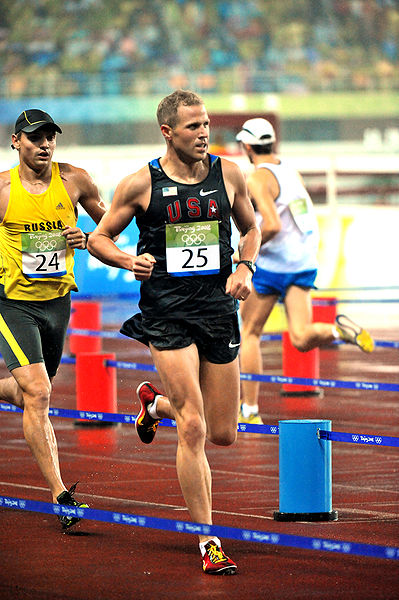 The switch to bipedalism (two-legged walking) meant that we needed to rearrange some muscles and change the shape of some of our bones. There are countless changes that took place over millions of years and I obviously don't have time or space in this post to go into them all. Therefore, I'll just concentrate on two big changes: the rearrangement of our gluteal muscles and the change in our foot bones.
Gluteal muscles help keep us standing upright. They pull us back up when we've jumped and are trying to re-straighten our bodies. Gluteus maximus pulls our thigh back from a bent position at the hip. Gluteus medius and minimus help us stay steady standing on one leg. They tighten on the outer edge of our leg to keep us from buckling in, since our center of mass is in the middle of our bodies and being on one leg makes it hard not to fall inwards towards that.
In other animals, these muscles are smaller and less important. Gluteus maximus in particular is barely existent in most other species. They're essentially just muscles that rotate the thigh, so for most animals, they don't need giant muscles to help with that. But we do. And that's one of the major changes that had to take place to make bipedalism possible (and comfortable!).
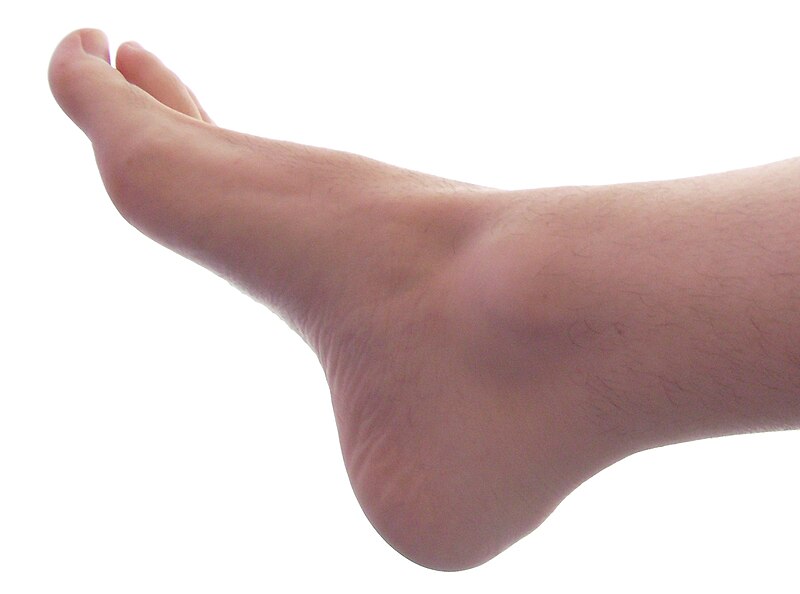 The other big change was in our foot structure. Instead of having an opposable big toe like other apes, ours is in line with the rest of our toes. In addition, we've developed an arching pattern in our foot bones. This major change helps conserve energy while walking and running. Instead of having our weight go from the heel, through the center of the foot, and out through the center toes upon lift-off, our weight transfers from our heel, through the outside of our foot, to the ball of the foot, and out the big toe which is better at supporting the weight.
So that's a bit of explanation of what it took to get us on two legs. But how did we start running on two legs?
That's where tendons come in. We've got some pretty amazing tendons in our legs, rivaling those of freaking antelopes. Particularly our Achilles tendon. It's huge. These tendons act like rubber bands, springing us forward and yanking our legs back into place for the next step. Rearranging bones and muscles might have started us walking on two legs, but it was strengthening the tendons that got us running.
But why? Why did we change to start running? We aren't really that fast, compared to other animals. The scary cats could easily chase us down to eat us, so what did all this running help us to do?
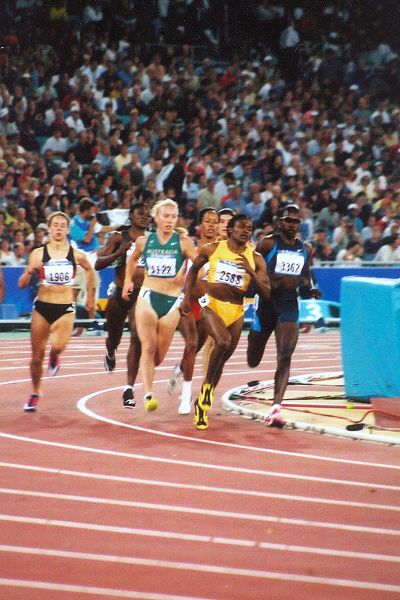 The leading idea is that it got us meat. Maybe we couldn't out-sprint the things hunting us, but we could out-last the things we were hunting. We aren't cheetah-fast, but boy can we ever run marathons. Humans are great at running consistent speeds over long distances. Humans still do this today to catch food. Hunters chase down their prey for hours and hours, tiring out the animal until they can't move any more. Then we strike.
It's one idea, at least. Though, I'm pretty sure catching gazelles isn't what most of the Olympians will be thinking about during their runs over the next few days. That's the coolest part of all of this, in my opinion. Taking things that evolved to help us in one way, and applying them in a brand new way. Just like typing on this keyboard right now. My fine motor control did not evolve to let me write blog posts, but that's what I get to do with those skills in the modern world.
So the evolutionary story continues.
PS: For those curious and wanting more information, here's a great article about the evolution of running.
But how do we move so quickly? It all comes down to adaptations of our hind limbs, millions of years in the making.
The Science of Legs
We take for granted our ability to move around on two legs, but it's kind of a big deal. Almost every other land animal runs on four legs, not two. I say almost, because there are notable exceptions...But we are the only animal that runs on two legs and has no tail to act as a balancing mechanism. This requires some specialization.
Interestingly enough, it was by losing our tail that we were first able to frequently assume upright postures. All those muscles that used to control our tail were re-purposed to hold up our guts. Really.
Our pelvis sits at the bottom of our torso and without those muscles there, our guts would just fall through our pelvis. Gross, yes, but true. The muscle is what holds everything up, and we wouldn't have that if we still had those muscles going out for our tail.
(Why does that Utahraptor above not have this problem? Well, honestly, they don't stand like we do. They aren't "upright"...they don't have their pelvis rotated like ours for that problem to even exist.)
But being upright is just step one on the way to running on two legs. Next, we had to somehow change from moving around with help from our hands, to moving solely on two feet.
Other apes walk on two feet. Some quite frequently. But no other ape can walk only on two feet all day, every day. That's the realm of humans.
Gluteal muscles help keep us standing upright. They pull us back up when we've jumped and are trying to re-straighten our bodies. Gluteus maximus pulls our thigh back from a bent position at the hip. Gluteus medius and minimus help us stay steady standing on one leg. They tighten on the outer edge of our leg to keep us from buckling in, since our center of mass is in the middle of our bodies and being on one leg makes it hard not to fall inwards towards that.
In other animals, these muscles are smaller and less important. Gluteus maximus in particular is barely existent in most other species. They're essentially just muscles that rotate the thigh, so for most animals, they don't need giant muscles to help with that. But we do. And that's one of the major changes that had to take place to make bipedalism possible (and comfortable!).
So that's a bit of explanation of what it took to get us on two legs. But how did we start running on two legs?
That's where tendons come in. We've got some pretty amazing tendons in our legs, rivaling those of freaking antelopes. Particularly our Achilles tendon. It's huge. These tendons act like rubber bands, springing us forward and yanking our legs back into place for the next step. Rearranging bones and muscles might have started us walking on two legs, but it was strengthening the tendons that got us running.
But why? Why did we change to start running? We aren't really that fast, compared to other animals. The scary cats could easily chase us down to eat us, so what did all this running help us to do?
The leading idea is that it got us meat. Maybe we couldn't out-sprint the things hunting us, but we could out-last the things we were hunting. We aren't cheetah-fast, but boy can we ever run marathons. Humans are great at running consistent speeds over long distances. Humans still do this today to catch food. Hunters chase down their prey for hours and hours, tiring out the animal until they can't move any more. Then we strike.It's one idea, at least. Though, I'm pretty sure catching gazelles isn't what most of the Olympians will be thinking about during their runs over the next few days. That's the coolest part of all of this, in my opinion. Taking things that evolved to help us in one way, and applying them in a brand new way. Just like typing on this keyboard right now. My fine motor control did not evolve to let me write blog posts, but that's what I get to do with those skills in the modern world.
So the evolutionary story continues.
PS: For those curious and wanting more information, here's a great article about the evolution of running.
Wednesday, August 1, 2012
Science of the Olympics: The Shoulder
But how do they flip around like that? How do they swim so fast? What's going on?
 |
| Getty Images |
The Science of the Shoulder
Our shoulders allow for a near full-range rotation of our arms. Go ahead and swing your arms around for a while. Reach up over your head. Stretch out backwards behind you. Congratulations, you're an ape.

But how do we, and our fellow apes (chimps, gorillas, gibbons, bonobos, and orangutans), do this? To answer that, we need to look at the bones.
See, when you want lots of flexibility, you need a large surface area at the joint for unhindered movements.
What you see below is a top-down view (or "proximal" view) of the humerus of a monkey (baboon) and an ape (human), via eskeletons.org. This is the end of the humerus that would come into contact with the scapula (aka the shoulder blade). It's known as a ball-in-socket joint.

 The left picture is from the baboon, the right from the human. You can
immediately see the difference in surface area for the contact zone. If
you trace the length of the smooth, curved edge, you'll see that the
baboon only has a smooth zone around about half of it's end, while the
human one extends nearly two thirds. Plus, the human's humeral head is
all around larger than that of the monkey. More surface for the humerus
to slide around in the socket of the shoulder blade = more range of
movement.
The left picture is from the baboon, the right from the human. You can
immediately see the difference in surface area for the contact zone. If
you trace the length of the smooth, curved edge, you'll see that the
baboon only has a smooth zone around about half of it's end, while the
human one extends nearly two thirds. Plus, the human's humeral head is
all around larger than that of the monkey. More surface for the humerus
to slide around in the socket of the shoulder blade = more range of
movement. 
 Again, on the left we see the baboon humerus. It's easy to see from this side view the difference between the humerus head of the monkey versus the human (on the right). The head of the human humerus is much larger and rounder, a much better "ball" for the ball-in-socket joint.
Another thing to point out is how curved the monkey humerus is compared to the human's. The straightness of the human arm allows us to hang from things safely. To understand this, you just need to think about the tension. The straighter the bone, the less likely it is to break from tension stressing its curves.
But why do we need any of this? Why did we end up with super flexible shoulders and this ability to hang from stuff? Evolution wasn't exactly working to allow us to flip around like acrobats...or was it?
Actually, it was. Hanging from trees (or "suspension") is a great adaptation. It gives us the ability to move along a branch and take advantage of more area around us: everything above the branch (by sitting on the branch like a monkey) and everything below the branch (by hanging under it). That means more food!
Brachiating, or arm-swinging from branch to branch, was just the next step. Instead of having to climb back to the trunk of the tree, climb down, and climb back up another tree, it's easier to be able to move from tree to tree up in the canopy. Monkeys tend to do this by leaping between trees. Apes don't have tails and tend to be heavier, so leaping between trees is trickier for our balance. That makes it's safer to be able to reach an arm and pull oneself towards the next tree. Do that over and over, and you end up brachiating. The faster you can brachiate, the faster you get to the new food source (or get away from the scary thing chasing you!).
This acrobatic ability has made apes the top gymnasts in the world. And while humans tend to get all the attention for it (especially during the Olympics), sometimes it's good to remember that our cousins have this cool ability, too. I'll end this post with an awesome video of a gibbon showing off this super flexible shoulder joint to mess with a couple tigers. Someone get that ape a gold medal!
Thursday, July 26, 2012
Science of the Olympics: The Flame

I won't be talking about the stories you'll hear on television or read online or chat about at the office...I'm going to cover the story of the science. I'm going to explain what makes the Olympics physically possible.
My first entry will be the only one that doesn't deal directly with human biology (though one could argue that it touches upon it). In this post, I'm going to explain why the Olympic Flame shines, and why we care about that symbol so much. (As a hint for extra fun, feel free to read all these "Science of the Olympics" posts in David Attenborough's voice. Trust me, it's worth the effort.)
THE SCIENCE OF THE FLAME
When it comes down to it, the Olympic Flame is just the visible part of a controlled fire. Fire, in turn, is just the result of a chemical reaction.
Fire is something that's integral to our lives, yet few people really understand how it works. I think most people are at least aware that to start a fire, you need a fuel source, a heat source, and oxygen. But why, when those three come into combination, does it result in strange dancing flames, intense heat, and different colors?
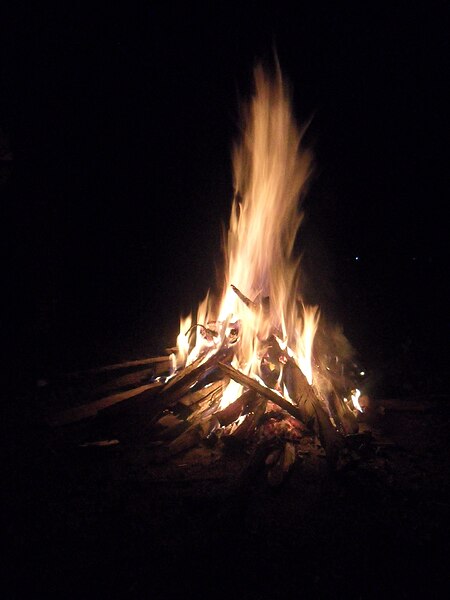
However, if the wood is heated to 300 degrees Fahrenheit, that's an entirely different story. At that point, its cellular material begins to break down, which releases volatile gases. The gas molecules break apart and mix with the oxygen from the air, which forms new molecules and a whole bunch of released energy, given off as more heat. Some of the material leftover is the carbon bits (the stuff that ISN'T volatile gases), which also eventually reacts with the oxygen, just much slower than the gases. You likely know this as charcoal.
A key thing to keep in mind is that in such reactions, energy is given off in the form of heat. So the heat increases during these reactions, which helps continue to produce even more reactions by breaking down even more material. Also, remember that everything beyond the reacting materials (say, the other stuff in the forest) is still at a lower temperature, including the air. Because of this, the molecules and atoms involved in the reaction rise up and float, since they are more spread out and less dense than everything else around them.
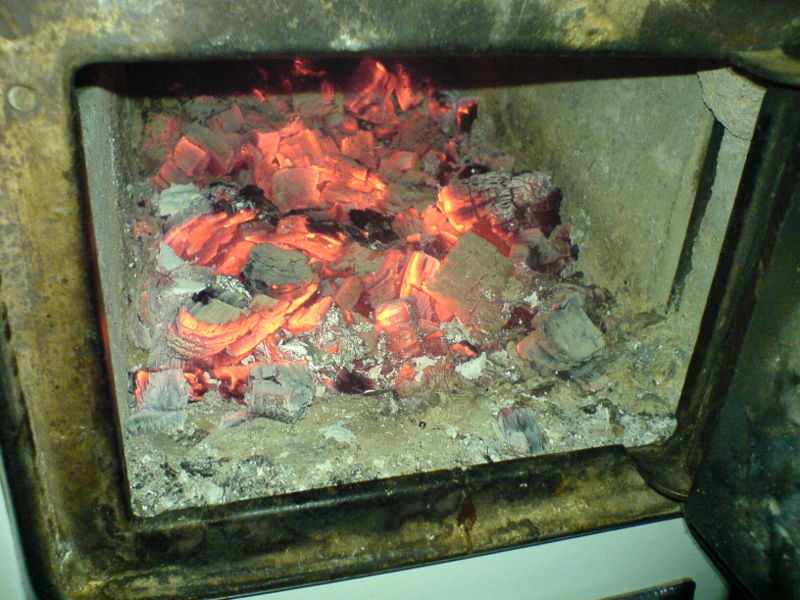 |
| Charcoal is the carbon leftover after the volatile gases escape. |
Not every kind of matter will burn when it is heated up. Water, for instance, won't react with oxygen this way. Heat up water, and the water molecules stay as they are...they won't break apart and mix with the oxygen in the air. They'll just kick around as water vapor. So you really do need particular types of matter to act as proper fuel.
Speaking of matter, it's important also to understand that fire isn't a type of matter. Fire is a reaction. The flame you see is the light from the reaction. Light isn't matter. The heat you feel is from the reaction. Heat isn't matter. The colors you see are just a result of the temperature. Higher temperatures result in a blue hue because of the speed of the atoms, while lower temperatures have more of a red hue. All this is just energy, not matter.

Now, I've been using wood as the example, but the 2012 Olympic torch does not use wood as its fuel source. Instead, it uses a mixture of gases similar to the volatile gases released by wood. Therefore, the torch won't leave a trail of ashes behind, but will still have the ability to release energy in the form of heat and light. Simple enough.
So now that we understand how the Olympic Flame works, it's time to think about why we have it at all. Why a flame?
 This is where human biology comes in. Or rather, human psychology (which of course boils down to human biology in the end, anyway).
To understand our fascination with fire, we need to think back to what it symbolizes: warmth. Safety. Food.
Uniquely for our species, fire is not immediately something to be feared. We are wired to be captivated by it and want to experiment with it. (Think about it...how often do you need to tell human kids to leave fire alone, versus how often you need to go outside and chase birds or bats or any other animal away from your bonfire?)
Evolutionarily speaking, those of us humans who were not afraid to get close and work with fire were the ones who survived.
 As for the Olympic Flame itself...well, being captivated by big communal fires is burned into our genetics and hard-wired into our brains. We see a large controlled fire, and it's an unmistakable calling to come out from the dark and gather around it with our neighbors. In the case of the Olympics, however, our neighbors happen to be every other human on the planet.
I find that rather poetic.
The Olympic Flame unites us in a way few other symbols could, because it reaches down and touches something inside us two million years in the making. Something that, when you really study it, isn't a "thing" at all. It's not matter. Fire is just energy. And if being called together by a common fascination with raw energy isn't embodying the Olympic Spirit, I don't know what is.
So let the Games begin!
Wednesday, July 4, 2012
HIGGS BOSON (most likely) FOUND
They've made the announcement. It appears that the elusive Higgs boson particle has finally been found (OH MY GOD THIS IS AWESOME NEWS).
 This is critical. This is a particle that physicists knew must exist, but no one could seem to actual observe it in any way.
Thanks to the Large Hadron Collider and a dedicated team of scientists working for years on this project, they can say with pretty much 100% certainty that they've found what they've been looking for. But what exactly is that? What is a boson, anyway?
To my understanding, bosons are particles that essentially account for all the forces we know, by interacting with each other and other particles, known as fermions. In the case of the Higgs boson, it can be thought of as the reason other particles have mass. That's a pretty important role to play in the universe, so it's obvious why the physicists on the hunt were so driven to find this particle.
Its existence was predicted nearly 50 years ago, and in that time many other particles of the "Standard Model" have been found and confirmed. The Higgs boson, however, held out. This was ridiculously frustrating, because the Standard Model depended on it (see image above).
So how do they know they found it? Well, by smashing protons together in the Large Hadron Collider, scientists observed what particles popped around after each collision, and did their best to measure them. And two teams, working independently to do such tests, have recently found a particle around 125 gigaelectronvolts in weight...which is just about exactly what the Higgs boson was predicted to weigh, and nothing else. Holy cow. SO COOL.
Major congratulations to all teams involved in this epic discovery. This is a monumental day for physics, and therefore a monumental day for everything in existence.
Perhaps my physics friend Andy would care to weigh in on this discovery in a future post, and his take on how this sneaky particle finally managed to be revealed...
This is critical. This is a particle that physicists knew must exist, but no one could seem to actual observe it in any way.Thanks to the Large Hadron Collider and a dedicated team of scientists working for years on this project, they can say with pretty much 100% certainty that they've found what they've been looking for. But what exactly is that? What is a boson, anyway?
To my understanding, bosons are particles that essentially account for all the forces we know, by interacting with each other and other particles, known as fermions. In the case of the Higgs boson, it can be thought of as the reason other particles have mass. That's a pretty important role to play in the universe, so it's obvious why the physicists on the hunt were so driven to find this particle.
Its existence was predicted nearly 50 years ago, and in that time many other particles of the "Standard Model" have been found and confirmed. The Higgs boson, however, held out. This was ridiculously frustrating, because the Standard Model depended on it (see image above).
So how do they know they found it? Well, by smashing protons together in the Large Hadron Collider, scientists observed what particles popped around after each collision, and did their best to measure them. And two teams, working independently to do such tests, have recently found a particle around 125 gigaelectronvolts in weight...which is just about exactly what the Higgs boson was predicted to weigh, and nothing else. Holy cow. SO COOL.
Major congratulations to all teams involved in this epic discovery. This is a monumental day for physics, and therefore a monumental day for everything in existence.
Perhaps my physics friend Andy would care to weigh in on this discovery in a future post, and his take on how this sneaky particle finally managed to be revealed...
Tuesday, June 19, 2012
Summer Solstice
Tomorrow will mark the Summer Solstice for the Northern Hemisphere, leading us into the first full day of summer on Thursday. The first day of summer is also known as the "longest day of the year". For us on the Northeast coast of the U.S., sunrise will be just after 5 am, and sunset will be close to 8:30 pm. That's nearly 15 1/2 hours of daylight.
 I think we all have a basic understanding of why this happens. Earth is tilted on its axis, and on June 20th, 2012, that tilt aims us "Northern-Hemisphere-ers" at the sun for longer in Earth's rotation. Nearly 64% of the time Earth spends rotating tomorrow, we'll be on the "lit up" side of the planet.
For the Winter Solstice, this is all flipped.
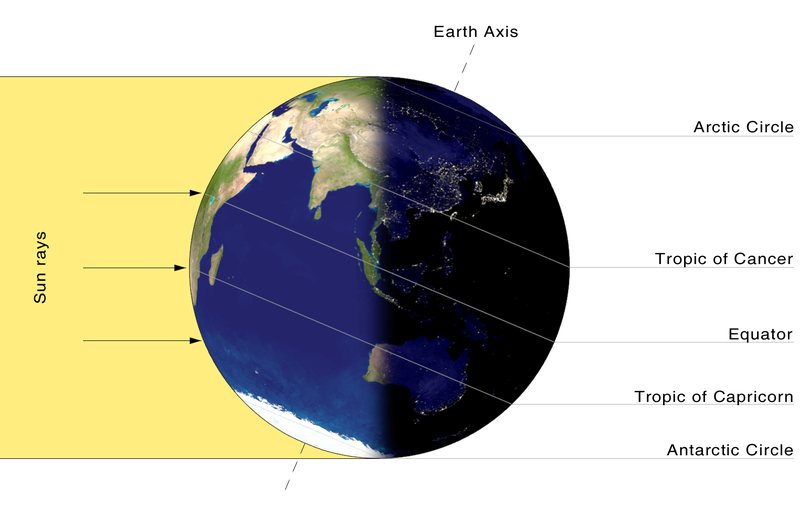 During the Winter Solstice, we spend most of our 24-hour rotation period on the DARK side of the planet. If you're still having trouble visualizing this, take a look at the Tropic of Cancer. For the Summer Solstice, on this side-view of Earth, you see that about 2/3 of the line is in the daylight, 1/3 in the dark. It's opposite on the Winter Solstice picture. And all this is simply a result of Earth orbiting the Sun.
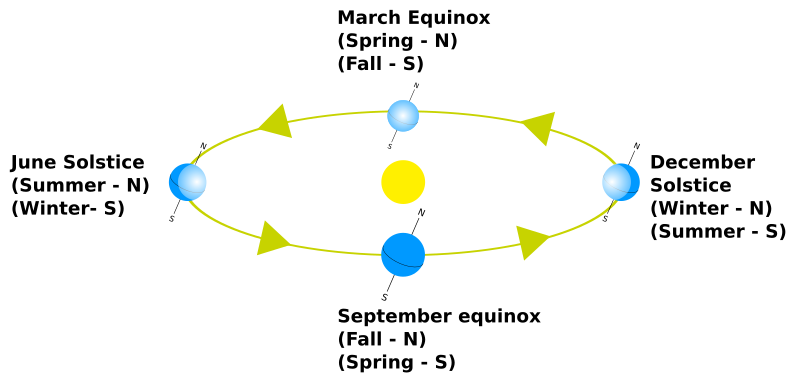 So if it's so basic, why am I blogging about it?
...Because this is a perfect example of how far we've come in our understanding of the universe.
People have been observing the solstice for thousands of years. We've created monuments around the world to showcase these special days (Stonehenge, anyone?). We've spent centuries arguing about what the solstice tells us concerning our position in space. And today, the scientific explanation of the solstice seems so simple and commonplace, we barely give it a second thought.
That's AWESOME.
And that is the power of science: to pursue the understanding of a phenomenon until it's figured out and explained to the rest of humanity.
Now, sadly of course, there are many people who still have no real understanding of what the solstice is about. I work with kids every day who are just wrapping their minds around this. But as far as scientific ideas go, the solstice is actually one of the ones best understood by the general public.
So tomorrow, as you enjoy your extra sunshine, just think about that for a minute. Think about how far we've come with science. Think about what we know (and take for granted knowing) now, that our great-ancestors did not. And then pause to think about what sorts of weird phenomenon science will be able to explain in the future. Just what will an everyday-person on the street have a decent understanding of in the year 3012, that would blow our minds today?
(For my writer-readers out there...consider that a prompt!)
For the Winter Solstice, this is all flipped.
...Because this is a perfect example of how far we've come in our understanding of the universe.
People have been observing the solstice for thousands of years. We've created monuments around the world to showcase these special days (Stonehenge, anyone?). We've spent centuries arguing about what the solstice tells us concerning our position in space. And today, the scientific explanation of the solstice seems so simple and commonplace, we barely give it a second thought.
That's AWESOME.
And that is the power of science: to pursue the understanding of a phenomenon until it's figured out and explained to the rest of humanity.
Now, sadly of course, there are many people who still have no real understanding of what the solstice is about. I work with kids every day who are just wrapping their minds around this. But as far as scientific ideas go, the solstice is actually one of the ones best understood by the general public.
So tomorrow, as you enjoy your extra sunshine, just think about that for a minute. Think about how far we've come with science. Think about what we know (and take for granted knowing) now, that our great-ancestors did not. And then pause to think about what sorts of weird phenomenon science will be able to explain in the future. Just what will an everyday-person on the street have a decent understanding of in the year 3012, that would blow our minds today?
(For my writer-readers out there...consider that a prompt!)
Subscribe to:
Posts (Atom)