Showing posts with label Monthly Science Roundup. Show all posts

Thursday, June 12, 2014

Spring Catch-Up: Science Roundup

It's no secret that my Weekly Science Roundups fell by the wayside with the rest of my blogging. As I continue to play catch-up on all the events of Spring 2014, I absolutely did not want to miss out on the science! So here's four of the coolest science stories from the past two months.


1. Kepler Mission Extended (and Revised)

NASA

Last year the exoplanet-hunting telescope, Kepler, was forced into retirement by a busted wheel in it housing. However, most of its equipment was still functional and NASA deemed it a waste to just let it all drift out there doing nothing.

Thus "K2" was born. A new mission for a repurposed telescope. K2 will still be on the hunt for exoplanets, but will do so from only one plane of observation, rather than being able to move between planes. It's basically missing an axis to move along because of that broken wheel. Regardless, it's still one of the best pieces of technology ever sent into space, and I'm positive it will continue to advance science even with this handicap.

Go, K2, Go!


2. Teenager's 12,000 Year-Old Skeleton Sheds Light on American Ancestry
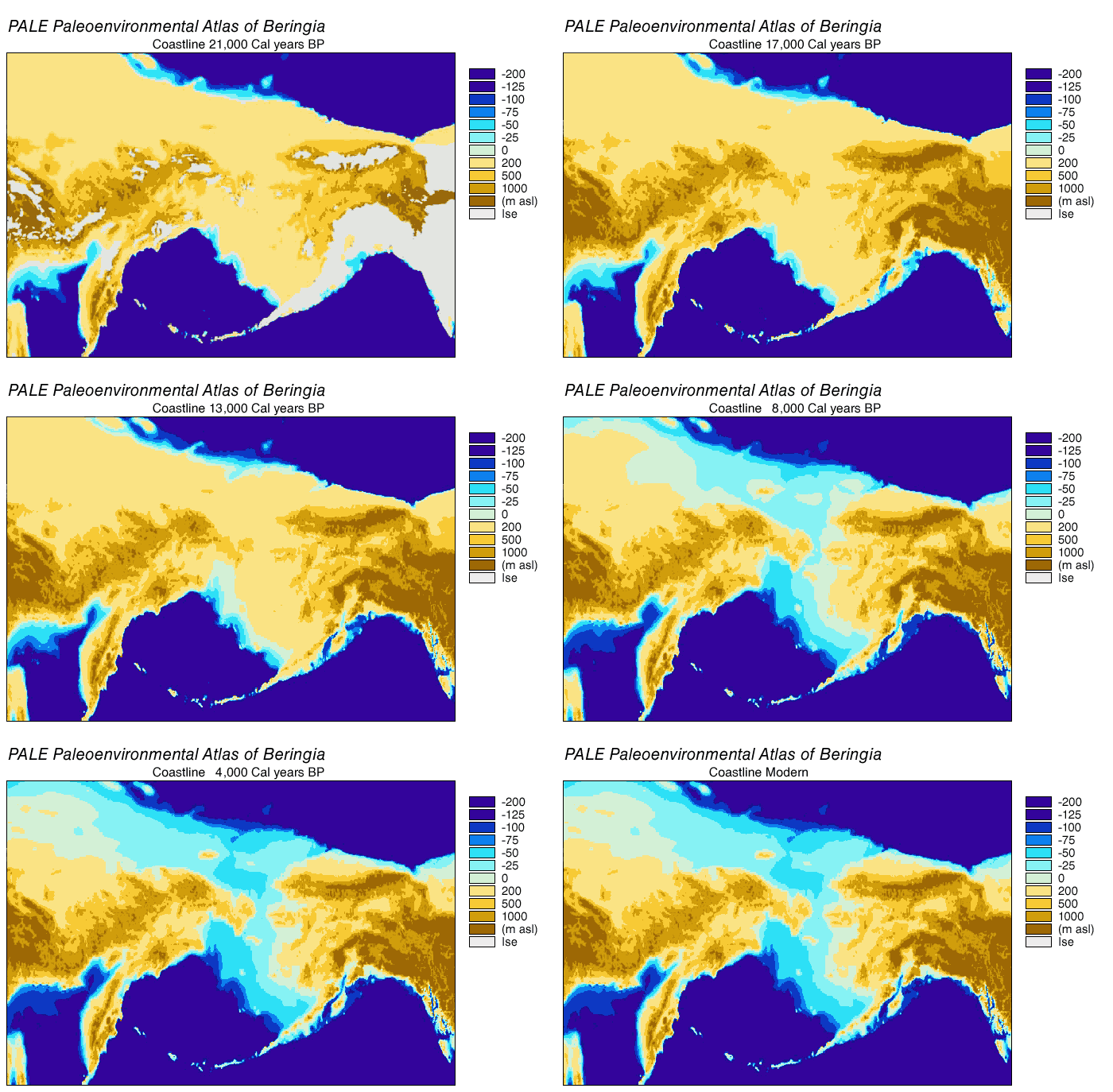
NOAA

Ancient Americans--or "Paleoamericans"--crossed the Bering Land Bridge between Asia and North America around 20,000 years ago. Despite Paleoamericans and modern Native Americans physically appearing less alike than one might logically guess, a new find has shown that they are genetically very similar.

The discovery is of a 15 year-old female skeleton, dating back over 12,000 years, found in Mexico. She shares a genetic haplotype with modern Native Americans that is found in no other ancient lineage.

What this means is that there wasn't a second (at least, a second major) migration that brought in the ancestors of Native Americans--their populations are almost certainly descended from these original Paleoamerican cultures. The differences in physical appearances is likely just an artifact of deep time.

This, by the way, is the second major genetic study this year to link these populations.


3. Quantum Teleportation a Reality?
Subatomic structure of a neutron.

Quantum teleportation. Just say those two words out loud for a moment. Congratulations. You officially sound awesome.

But what the heck did you just actually say? Well, turns out what you said is actually something real.

The idea behind it is that we are all made of atoms arranged in particular ways, and inside the atoms are subatomic particles arranged in particular ways. As such, if we just make some particles over there arranged in the exact same way, we have achieved teleportation. And thanks to the idea of entanglement, where "entangled" particles can influence each other from far away, distances can be overcome easily. So to speak.

Just a fun thought experiment? Nope. Again, this is real. They've done it. They actually teleported a small amount of information ten whole feet.

It's a baby step, to be sure, but theoretically this could grow to be much, much more. One end result may be Quantum Computing--an internet-esque network of machines that could someday make today's networks look like molasses.


4. Evidence for Explosive Moon Formation Theory
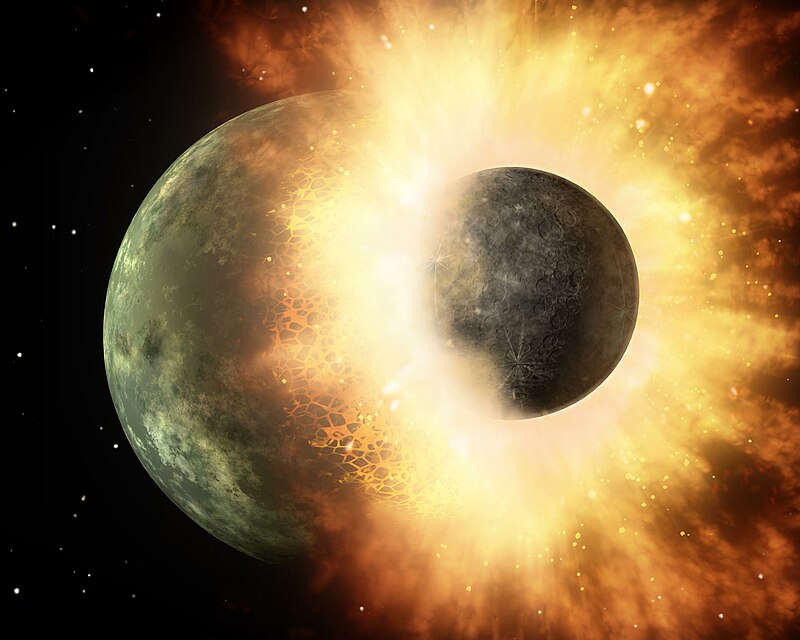
NASA

So the story goes like this: Over 4 billion years ago, Earth was slammed into by an object the size of Mars. We call this planet-y thing "Theia". Our moon formed from parts of Earth and parts of Theia. (Gravity + time + lots of mass = round things)

Now there's finally proof that story actually happened. A chemical analysis of moon rocks has detected a different kind of oxygen isotope than is found on Earth, indicating an external source.

This shows that the moon wasn't just formed from the same exact cloud of dust and spacerock that Earth came from. 30-50% of it was from something else. It's concrete evidence that another major body was at play in the moon's formation.

Theia was really out there once.

I love when awesome hypotheses get shown to be right.


Friday, January 31, 2014

Monthly Science Roundup #3

Kicking off the new year right, by being behind on all my Weekly Science Roundups! When will I learn? Now I have to go through all the unpublished posts and try to pick the four most exciting stories I wanted to talk about. Which, you should know by now, probably means prehistoric animals and SPACE.

Anywho. Onwards to the third Monthly Science Roundup, with my top four science stories of January:


1. Colors of Ancient Sea-Faring Reptiles

Image Credit: Stefan Sølberg. Johan Lindgren et al. Skin pigmentation provides evidence of convergent melanism in extinct marine reptiles. Nature, published online January 08, 2014; doi: 10.1038/nature12899

Can we ever know the color of extinct creatures? The answer has rapidly been trending towards yes. 

In the past few years, fossil melanosomes (an organelle in animal cells that's responsible for much of the pigmentation that gives animals color) have been discovered and analyzed time and time again. For instance, we now know with a decent amount of confidence that some ancient feathered dinosaurs had brown, black, red, and white on their feathers. Which...is pretty amazing.

If you aren't comprehending the hugeness of this, try to remember that these creatures haven't been seen on Earth for tens of millions of years.

And we know what COLOR they were.

And now we know the color of a handful of sea reptiles, as well. This is one of the first major instances of determining colorization of skin rather than feathers, and it's a super big deal.

An 85 million year-old mosasaur and a 55 million year-old leatherback sea turtle have both been shown to have the typical ocean-coloring pattern: dark on top, light on bottom. This is known as countershading, and assists them in blending in (dark when seen from above, like looking down into the ocean, and light when looking up, as if looking towards the sunny surface).

Additionally, a 193 million year-old ichthyosaur has been shown to be solid black, much like the modern day sperm whale. The sperm whale is uniformly dark because it dives to the depths of the ocean to hunt, which gives us a clue about the hunting style this ichthyosaur had.

Again, let that sink in: fossilized skin patches have microscopically informed up as to the color of things that are long-since dead, and what we've learned from the color has now taught us things about the behavior of animals that could never EVER be observed alive by human beings.

I love science.


2. Water on Ceres

Ceres. Image by NASA.

The largest asteroid in our solar system--and a dwarf planet in its own right--might have water erupting out of it.

The Herschel Space Observatory has found that water vapor is escaping Ceres in two locations, likely bursting out of volcano-like geysers. Huge ones.

This is the first serious evidence of water in the asteroid belt, though scientists have guessed there might be some there for decades.

A slightly less fun model of where this water comes from is that it is sublimating from ice on the surface of the asteroid, much like a comet would have.

I'm more of a fan of the WATER VAPOR GEYSER ERUPTION idea, so until they prove it's the other method, I'm going to mentally imagine Ceres exploding geysers into the asteroid belt.


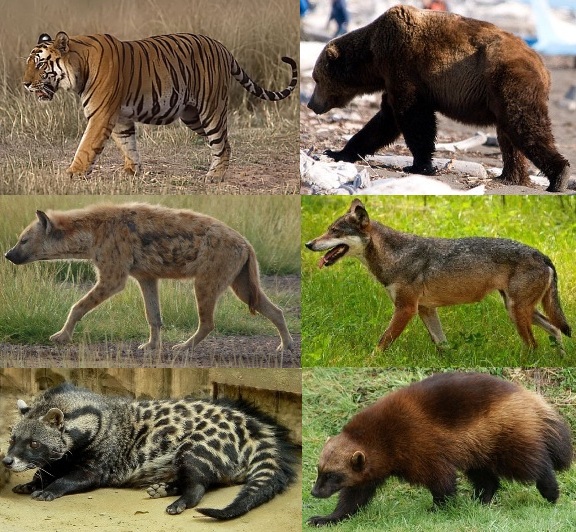
3. Root of All Mammalian Carnivores Discovered


Tons of new fossil material from 55 million years ago has been discovered in Belgium. Among it includes over 250 bones of Dormaalocyon latouri, a newly discovered predecessor to modern mammalian carnivores.

Dogs, cats, bears, weasels...you name it, if it's eating meat, running around on land, and has fur, it comes from one single lineage of sharp-toothed predators of which we know a surprisingly little amount. With this new discovery, the doors to early mammalian carnivore evolution have been smashed open.

In life, Dormaalocyon latouri was maaaybe 2 pounds in weight, so it wasn't exactly the world's biggest predatory mammal. But at that time, practically all mammals were puny, so it would've actually been a formidable hunter to a lot of the fauna. Also, it was arboreal, meaning that it spent a lot of time in the trees. Envision a cat crossed with a squirrel, and you might have a reasonable idea what this thing looked like.

It's just fantastic that we have something near the root of the carnivore family tree. And to make it even better, it's from one of my favorite time periods: the Paleocene-Eocene Thermal Maximum. This is a very tiny window of time, and has equally tiny animals within it. It's the same time period that I worked on out in Wyoming several summers ago, while on my fossil expeditions. A lot of modern mammal lineages originated in and around this time period, so it's awesome to find the beginning of another one!


4. We've Got Black Holes All Wrong


Stephen Hawking has made a pretty big claim that's getting a lot of media coverage: black holes don't necessarily suck things up and keep them forever.

This goes against the very basic understanding of black holes. They're supposed to be terrifying places from which nothing can escape. So what gives?

Essentially, what Hawking proposes, is that there is no event horizon for black holes. Classically, an event horizon is thought of as the point of no return. The place where nothing, not even light, can escape the black hole. And also classically, you shouldn't be able to notice if you cross this horizon.

Hawking instead proposes that there is an "apparent" horizon. Things are held, suspended, within this horizon, but could escape if the horizon breaks down. Of course, he points out that anything past the horizon would be so badly crunched and scrambled that it wouldn't at all resemble what it once had been if it does escape. But the point stands: if things could escape, then there is no "point of no return", and therefore, no event horizon.

An alternative to the classical event horizon has been bouncing around for a while, and that is know as the Firewall. At the edges of the black hole, there is such a concentration of energy that anything that crosses the line would be burnt to a crisp.

I don't really have anywhere else to go with this news story summary, because right now, it's super unclear which idea has more merit. I guess the take-home message is that black holes are weird, and we need a few more geniuses to put their minds towards thinking about them.

Monday, October 28, 2013

Monthly Science Roundup #2

Once again an entire month managed to escape me! November should slow down, but in the meantime I have missed all of October's science updates and can't let that slide. So in the style of September's roundup, here are the top FOUR science stories of October, in no particular order:


1. Signals from the Big Bang

Hershel Space Observatory

Learning about the very beginning of the universe is obviously a bit of a challenge. But thanks to new data from the South Pole Telescope and the Herschel Space Observatory, science has taken another step closer to understanding the Big Bang.

When the Big Bang occurred, it left a radiation imprint on the universe, and a small percentage of this radiation occurs as polarized light. There are two modes of this light: E-modes and B-modes. We've found E-modes over a decade ago. B-modes have proven elusive, though, and--sadly--are also the version that would provide serious information on the initial gravitational waves that occurred during the massive "inflation" of the universe fractions of moments after the Big Bang.

But now they've detected some. As light twists, crossing the universe and getting deflected/pushed around by the gravity of galaxies and dark matter, it produces B-mode radiation. That's what has been now found, thanks to the work of many dedicated astronomers. What we're still waiting on is whether the even more primordial version of this B-mode radiation has been detected. That should be revealed in 2014.


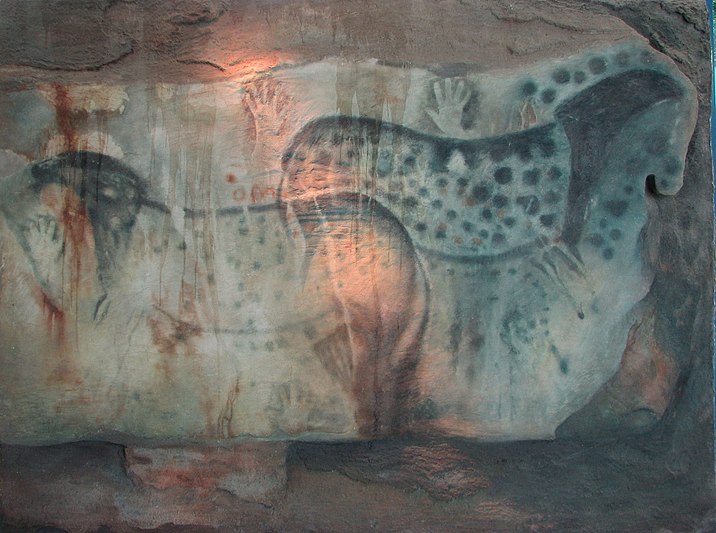
2. Women Cave Painters

Turns out cave art wasn't a "guy thing", like has been predominately assumed. About three quarters of all cave paintings may have in fact been done by women, according to a new study.

By measuring the hand prints associated with cave paintings and analyzing them next to proportions of men and women's hands from populations of European descent, it was discovered that not only was there clear sexual dimorphism among the cave hand prints, there was also a predominance of female hands in the paintings.

These hand prints could mean anything, but a likely hypothesis is that they're used as an artist's signature. This gives an insight into early human culture that goes against common assumptions of gender roles in ancient groups. But it brings up a new question: why mostly women?


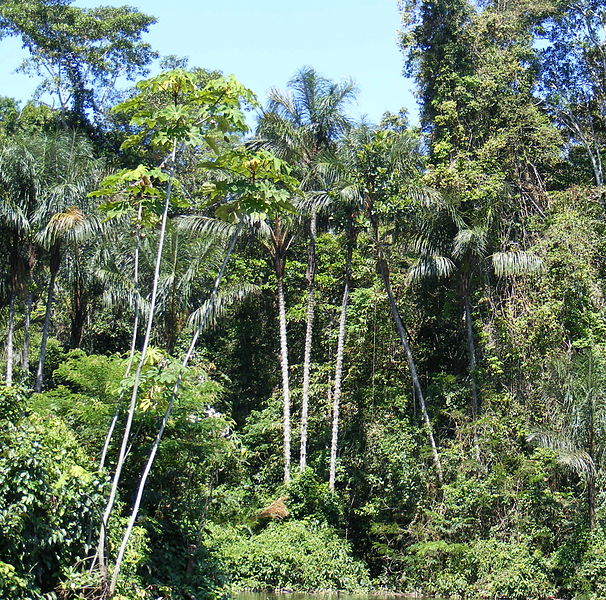
3. 441 New Amazon Species Discovered


On expeditions over the past four years have lead to the discovery of over four hundred new species in the Amazon rainforest. Of course, most of these are already in danger because of the environmental issues that region faces.

Among the new species include a piranha that doesn't eat meat, a flame-colored lizard, and perhaps most adorably, a monkey with babies that purr to one another. You read that correctly. Purring baby monkeys. If you get nothing else out of this blog post, I hope you at least have now smiled.


4. Single Species for ALL Early Humans?

Old American Museum of Natural History human evolution tree. Source.

This has been all over the news lately. A new skull has been found that has features so varying, that it seems to unite all species of early Homo (the genus of primate that humans belong to) into one single species. No more Homo rudolfensis vs Homo habilis. Just one united species.

First of all, the scoop: a new early human skull has been found in the Dmanisi region of Georgia. It's 1.8 million years in age, and is known as "Skull 5". It's preservation is spectacular. It's part of a group of skulls that are often thought of as the earliest Homo erectus, as it changed from Homo habilis.

Now take a look at the 2 million year mark on the picture above. See all the various "Homo" skulls at that time? They got split into different species based on features that are constantly argued over by paleoanthropologists. There's an age-old debate here.

Were these really different species? (Argument: modern primates have more than one species in their genus, why shouldn't we have had the same in prehistory?) Or were these different skulls all from one species that had a huge variation in skull shape? (Argument: species today can be wildly varying within their own bounds, so why not us?)

The new skull favors the second of the two arguments. And despite my eyebrow-raising at how it's been reported in the media (hype will always be hype), I'm not going to lie, this is very exciting stuff. The new skull has a variety of features shared with "different" species of Homo, young and old, and in particular, contemporary.

Basically, the traits of skull 5 should not all be in one skull. By our current understanding, and especially by the "different species" argument, they really shouldn't. And yet, here we are. Put it with the other skulls from the site, and it just makes it worse. None of that stuff should be together! Or so we thought.

John Hawks, anthropologist and web-blogger, sums it up best:

The entire early Homo sample has barely more variability than is found within the single Dmanisi site, at a single time.

What this means is that over the hundreds of thousands of years that Homo was kicking around as an early genus, at one single time at this one site, skulls have just as much variation among themselves as the entire lot of the rest of the stuff that's ever been found anywhere. Huh. Well then.

Imagine if you had never heard of Skittles, and then found a red Skittle. Maybe two. And then a couple days later, in a different place, you found a green Skittle. And maybe a week, later, a yellow Skittle in a different town. You might start assuming that each place has its own color Skittle, or that only certain colors show up at certain times. But then there's the day you discover an actual bag of Skittles. And you realize they all exist together. That's kind of what's happening here.

So it is a big deal. And it's messing with my brain, because I've always been a big fan of distinguishing Homo rudolfensis and Homo habilis. But as we've learned with Denisovans and Neanderthals, it is possible for different groups of humans to interbeed, even if they look different from one another or have other genetic distinctions. So there are ways of explaining this. I'm just not sure how to fold it into my personal version of our family tree just yet.

.....

There were a ton of other cool stories this month that I wished I'd been able to highlight (one in particular, but I will get to that soon enough). Weekly Science Roundups will be back on track for November!

But first: SVP 2013.


Tuesday, October 1, 2013

Monthly Science Roundup #1

September came and went, and I never had a chance to sit down and do any weekly roundups! But I didn't want to just ignore all science news from the past 30 days, so I've decided to post my first ever "monthly" roundup, with four of the biggest science news stories September had to offer.

1. Evolutionary History Rewritten?

Generic Placoderm anatomy.
"Every now and then you are confronted with jaw-dropping specimens like Lucy the Australopithecus (an extinct, upright-walking hominid) or the first batch of Chinese feathered dinosaur, unleashing a flood of new information that greatly clarifies our view of the distant past and often forces us to rethink what we thought we knew about evolution. A little fish called Entelognathus now joins the ranks of these exceptional fossil discoveries." - Dr. Brian Choo, Institute of Vertebrate Palaeontology and Palaeoanthropology in Beijing

So this happened. It's a very cool find, though it's going to need more scrutiny before we overthrow what we've previously thought of our evolution. Here's what was presented and proposed (and make no mistake, I am geeking out about this):

Classically, we say that the fish-to-land transition animals were descendents of shark-like cartilaginous fish, who eventually developed a strong enough skeleton to handle life out of water. But a new discovery shows that a group of early fish known as "placoderms" (famed for their outwardly bony armor), actually had three specific types of bones that were thought only to be found in the bony group of fish that scampered out of the water much later on. Cartilaginous fish do not have these bones. Therefore, the ancestor to cartilaginous fish and the bonier air-breathing, scampering variety, was actually a member of the placoderm family. Follow that?

Take-home message: Bony skeletons were the ancestral state. Not cartilage. Cartilaginous fish LOST their bones.

This is a really big deal. Textbook-rewriting-big. The order of skeletal development in evolution has just been turned on its head. If it holds up. (I hope it does. It's kind of awesome.)


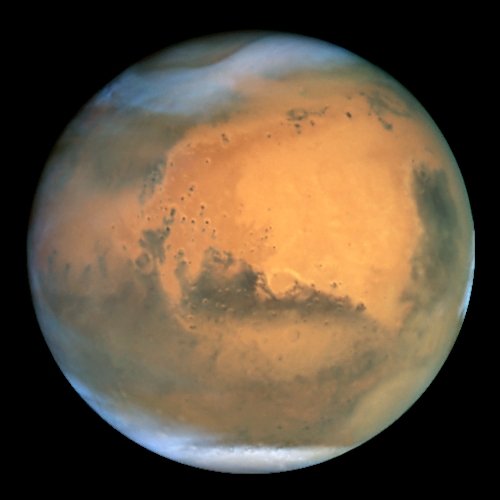
2. Water on Mars


Okay, maybe this doesn't sound like news. We've known about water on Mars for a while, right? Well, this time we're learning about water via the first ever chemical soil sample analysis from Curiosity! Especially since it involved using X-ray diffraction, which was long thought to be impossible to miniaturize enough to put on any sort of rover. Obviously, they managed it with Curiosity.

So what's the buzz? Turns out, there's a whopping 2% of water in one scooped up sample of dirt, which sounds like great news for rocket fuel farming. However, they also found a lot of perchlorate in the same sample, which is toxic to rocket fuel, and would make harvesting this water for that purpose rather difficult. Somewhat more interesting, is that it is likely both of these substances are only in the dirt because they're being absorbed from the thin Martian atmosphere.

There was a lot of media hype about finding water in this sample, but don't let that fool you. Mars is a hostile environment. Utilizing this water would not be a walk in the park. The bigger story here is the methods used to detect these things. I'm excited to see what else Curiosity finds with its fancy equipment.


3. Oxygen in Our Atmospher Earlier Than Thought

Banded Iron Formation. A geological early indicator of oxidation.
Based on geology, the usual accepted date for the first appearance of oxygen (in any serious quantity) in Earth's atmosphere was about 2.6 billion years ago. But researchers recently drilled into 3 billion year-old rock, and unexpectedly stumbled upon signs of oxidation from way back then!

Whoa. So what's going on? Oxygen has been hypothesized to have entered the atmosphere when photosynthesis developed in cyanobacteria. So this means either photosynthesis developed in cyanobacteria hundreds of millions of years earlier than though, or photosynthesis developed in something else way earlier, or there's another way of getting oxygen into the atmosphere in massive quantities that no one has thought of yet.

This is going to open up a slew of debate, and I'm anxious to follow along and figure this out with the scientists.


4. THEY'VE BUILT LIGHTSABERS


Okay, so not really. BUT THEY COULD.

Researchers at MIT have taken photons and gotten them to smush up together to form molecule-like structures. A serious feat, since photons have generally been thought not to have any real mass or interact with each other at all.

So what these interacting photons are doing is binding together and creating their own type of mass by pushing against one another. Essentially what theoretically happens in lightsabers. Because Star Wars is real and 9 year-old me is cheering louder than the Ewoks after the second Death Star explosion.

This was discovered when researchers sent photons into a super-cooled atom cloud. Because of atomic properties, nearby atoms can't be in the same level of excited state simultaneously. So photons exciting atoms end up pushing each other along so that the first photon moves on while the second excites a different atom. This energy transfers from atom to atom as they move. But this whole process slows the photons, so they end up leaving the cloud together, as a sort of "molecule".

And if we can make photon "molecules", we someday might be able to build entire photon structures. BUILD THINGS OUT OF LIGHT. LIKE LIGHTSABERS. AND MY LIFE WOULD BE COMPLETE.

Okay I'm done now.

Really. That was September.