Showing posts with label AWESOME DISCOVERY. Show all posts

Friday, December 30, 2016

Yearly Science Roundup: 2016

It's that time again. Time to look back at the year and sum up what amazing science happened!

These are my personal five picks for the top science stories of 2016. Three of them are space-related, which is only fitting with my space-themed debut novel coming out next year. Feel free to chime in down in the comment section with your own top picks, if they aren't on this list.

Anyhow, without further ado, here we go!

5. Proxima b

Image by ESO/M. Kornmesser

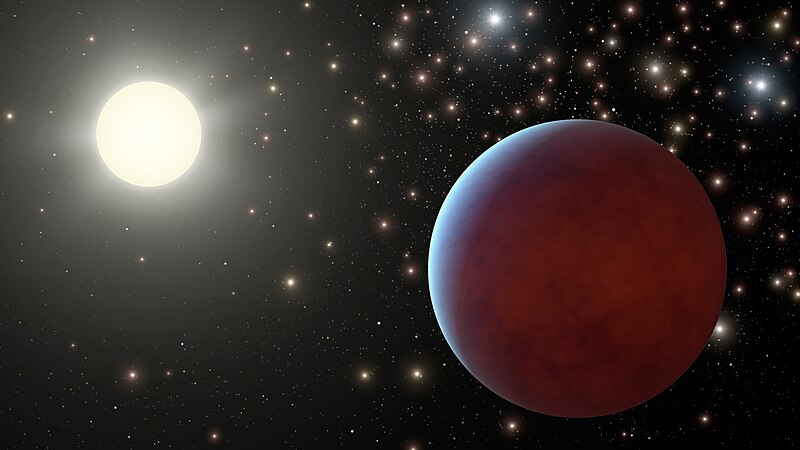
This past August, the European Southern Observatory reported the discovery of an Earth-like planet orbiting the star nearest to our own. Finding new exoplanets isn't as surprising as it used to be, but it's still super exciting to find one this close to our own place in space!

This planet orbits Proxima Centauri, a star only 4 light-years away. It is in the habitable zone, meaning it could have liquid water on its surface and temperatures within the range of our own here on Earth. It is 1.3 times the size of our planet, and probably rocky. To get there with modern technology would still take us 70,000 years, but folks are already planning ways to do it faster!


4. A Sappy Dino Tail

Credit: R.C. McKellar, Royal Saskatchewan Museum

This wouldn't be a Top 5 list from me without something prehistoric on it. It was hard choosing which paleontology story I was most excited about in 2016, but in the end, I had to go with the dinosaur tail stuck in freaking amber.

This amazing find came from Myanmar, and dates back to 99 million years ago. CT scans of the tail inform its classification as a dinosaur, but the type of feathers suggest it likely was not capable of flight. Also lodged in the amber with the tail was an ant, who unlike the dinosaur, didn't get away.


3. We Have LIFTOFF LANDING!


In a moment I'll never forget, on April 8th, SpaceX successfully landed its reusable Falcon 9 rocket booster on a drone barge in the middle of the Atlantic after launching it from Florida. This is a stunning example of engineering at its finest.

I'm so excited about this, you guys. The destruction of rockets during launch has been an expensive barrier for many missions. If the boosters can be reused, this opens the doors to an easier, more economical future for space travel! What an accomplishment.

(Oh, and also, it just looks really cool to see a rocket land on a flat boat in the middle of the ocean.)


2. Gravitational Waves are Real

Aerial shot of LIGO

In what is topping the list for many other sites, I have decided that this discovery will be my 2nd choice for Top Story of the Year. But it is really freaking awesome, so don't think I don't love it.

Decades ago, Einstein predicted this discovery. The concept is that when two massive objects accelerate around one another, such as during the merger of two black holes, it will cause gravitational ripples in the universe, like a stone dropped in a pond. These ripples will actually expand and compress spacetime itself. But how to test it?

Well, LIGO (the Laser Interferometer Gravitational-Wave Observatory) had the answer. Have two lasers in equal-lengthed tunnels aimed at a 90 degree angle from one another. Measure them carefully. And wait.

This year, LIGO observed that one tunnel's laser measured a different distance than the other's for a moment in time. One laser registered as shortening, while the other as lengthening. This compression and extension indicated that spacetime was distorted during the measurements. (And this has been replicated!) Gravitational waves have passed through! They're real, and Einstein was right...again!

This has been a discovery 50 years in the making. So why isn't it my #1? Well, let's get to it and find out.


1. The Antarctic Ozone Hole is Healing

Image credit: NASA

My top science story for 2016 is one of hope, in a time when we really, really need it.

The Antarctic Ozone Hole, which forms every year in the spring when a chemical reaction occurs in the atmosphere, is finally getting smaller. This comes nearly 30 years after an international treaty was signed to reduce the use of ozone-destroying compounds in industry.

As a kid, this was the biggest environmental crisis of the time. Years before I learned about global warming, my worries were focused on the hole in our ozone. It seemed impossible to fix it. All we could try to do, from my childhood understanding, was not make it any worse. Even that, however, sounded farfetched.

But we are fixing it. We're doing it! Intense public outreach about this issue, and some serious worldwide cooperation, is to thank for this environmental disaster being reversed. I had to make this my number one story, because it is proof that we can work together to change how we do things and save our planet from catastrophe.

Let's push forward, and fight for similar changes on other environmental fronts in 2017 and beyond. This should be a lesson to all of us, and a beacon of hope. We're succeeding with one major fight. We can succeed with others!

Let's do this, 2017!

Thursday, December 31, 2015

Yearly Science Roundup: 2015

I couldn't let 2015 go without recapping my top science stories of the year! There were three standouts to me in 2015. As always, these are my personal choices, so this is a completely biased ranking. You have been warned.


3. Paris Climate Agreement

 
In an agreement that was better than expected--though not quite enough, scientifically speaking--the nations of the world promised to try and keep global temperatures from rising more than 1.5 degrees Celsius. Accountability is still shaky, but the U.N. agreement does state that nations must report their progress every five years.

Mayors from hundreds of cities pledged that by 2050, they would run their towns only through renewable energy. This will give a much-needed economic push to the renewable energy industries. But the reality is that fossil fuels remain the cheaper option unless nations move to tax them, which is unlikely.

The moral of the story is that the Paris Summit was a major step in the right direction, though naturally more steps are needed. I'm choosing to look on the bright side, though. Every journey takes many steps, so as long as we're walking forward, that's better than standing stubbornly still.


2. New Horizons Reaches Pluto


People might be surprised that this isn't my number one, and I admit it was a close call.

On July 14th, New Horizons flew past Pluto, going faster than any man-made object in existence. It took nine years to get out to the Kuiper Belt, where Pluto is located at the edge of our solar system, and collected a wealth of knowledge in a matter of hours--including our first ever up-close pictures of Pluto!

Scientists are learning a bunch from this mission, but my favorite thing about it was how excited it got the public about space exploration. Everyone loves Pluto, and when we finally got to "meet" the dwarf planet this year for the first time, we learned Pluto loves us, too! The big heart-shape is a plain of frozen glacial nitrogen, brilliantly reflecting sunlight from three and a half billion miles away. How cool! Literally!

As for my number one science story of the year...


1. HOMO NALEDI!!!


Sorry, space. The paleoanthropologist in me wins out this year.

This story had ME written all over it. A new relative of ancient humans. Cool caves. A team of all-lady scientists. Live-tweets (and blogs!) of the discovery. And more fossils than can yet even be COUNTED.

Yes, the discovery and publication of Homo naledi is my number one story of 2015. The Rising Star Expedition began two years ago when reports came of a cave that appeared to have human remains. From there, Lee Berger assembled a team to explore this cave and see just how much was down there.

Turns out...a LOT was down there. So far, over 1500 fossils have been collected, from about 15 individuals--several of which seem to have associated skulls/skeletons.

That...is MIND-BOGGLING. For perspective, less than 5 finds in the history of early human paleoanthropology have consisted of an individual with skull and skeleton bones together. And here, in this one cave, are so, so, SO many more. Adults, infants, elderly...all here.

The species was given the name Homo naledi, after the cave in which they were discovered. I was lucky enough to see models of them in person in October. The hands and feet of these early humans are astonishing--so similar to ours, even though they themselves were only the size of Lucy. Their hands could certainly manipulate tools, but their brains were close to that of a chimpanzee's. Additionally, the way the fossils are deposited suggests deliberate, perhaps ritualistic, disposal of the dead by other members of the species. WHAT?! Wow. We have a lot to learn about this new species, and it is going to greatly influence our understanding of human evolution.

The biggest question remaining is the age of the specimens. There is no easy way to deduce it, because of the nature of the find, but I have faith science will find a way. This is too big of a find not to put our best efforts towards.

There are still a ton more fossils down in the cave, but to access it, you have to be an incredibly brave spelunker--and incredibly small! One passage is only 8 inches wide. I can't wait to see what more comes from this find in the future, and am still just completely blown away by what's been found so far.


So there you have it. My top science stories of the year. Onwards, to 2016!

Monday, April 14, 2014

In Case You Missed It: SPACE News Recap!

There's a lunar eclipse coming up tonight, and in honor of that I'm going through and listing all the cool space-related science stories I've missed in these last two months.

Here we go, in order of announcement...

  1. There was a massive increase in the number of confirmed exoplanets--aka planets that orbit stars other than our own. The 715 new planets found by the Kepler Space Telescope have upped the exoplanet count to almost 1700 known worlds. Many of those come from multi-planet systems, like our own solar system.

  2. A huge star was found. Really huge. Top ten biggest ever, and number one biggest "yellow" star. Our sun is classified as yellow, but this star is 1300 times the diameter of our's, and is referred to as a "hypergiant". It's also in a binary system, and its companion star is so close that it's basically touching. 

  3. The first moments of the cosmos had extremely rapid expansion. Scientists have found concrete evidence for the Big Bang. Cosmic background radiation has shown "gravitational waves" that left a mark during the intense inflation right at the beginning of the universe. It's a signature that can't be mistaken. This is really big news, guys. Like...really big.

  4. Sedna's location, for reference.
    A new dwarf planet may have been discovered. Like Pluto, it's small and icy, and like the wacky Sedna, it has a bizarre orbit that takes it far, far away from the sun. Way farther than Pluto. Almost reaching the Oort cloud. So how is it held in orbit at all? That's a mystery scientists are eager to dig into. Watch for more far-out dwarf planet discoveries in the near future.

  5. Two rings were found around the asteroid Chariklo, making this the first asteroid that we know of to have its own rings! It's likely that these rings were formed from some kind of collision event in the past.

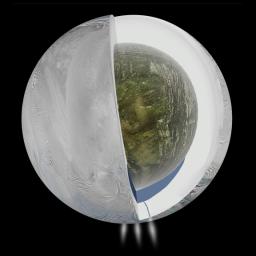
  6. Enceladus has an ocean! With geysers!
    Saturn's moon, Enceladus, has liquid water! Much like Jupiter's moon, Europa, under the icy surface of this world there is a massive ocean. It is warmed by the frictional tidal pull of the huge gas planet it orbits. Cassini--the mission NASA has out by Saturn at the moment--has already shown that water ejections from the planet contain salt and organic molecules. These are the ingredients for life. This ocean has just become one of the top candidates in the solar system for aliens! 

  7. There's new evidence that an absolutely enormous asteroid may have impacted Earth 3.26 billion years ago. This thing might have been five times the size of the space rock that hit at the end of the Cretaceous. It would've boiled oceans and vaporized rock. Vaporized rock. That rock vapor would've been flung into the atmosphere and rained back down as liquid before freezing back solid on impact. WOW.

  8. A possible exomoon has been discovered. So far, no moons orbiting exoplanets have been discovered, but it stands to reason that they're out there. Unfortunately for this discovery, it's unclear if the objects in question are a giant gas planet and a big moon, or a very tiny star and an exoplanet. With current technology, there's no way to tell which it is. But it does give the first bit of hope that exomoons are out there.

  9. And of course, speaking of moons, tonight we have a total lunar eclipse. It will last from approximately 3am (EST) to 5am on April 15th, if you're willing to be up then to watch for it. It's the first of four lunar eclipses we'll be getting between now and Fall of 2015, so if you miss it never fear--you may have more chances, depending on your local weather!

Phew! I think I hit most of the big stuff. Life became busy, and blogging got pushed aside. Hopefully I'll have more time for it this month, but for now I'm glad I at least got to catch up on all this space news. So much happened in such a short stretch of time!

Monday, October 28, 2013

Monthly Science Roundup #2

Once again an entire month managed to escape me! November should slow down, but in the meantime I have missed all of October's science updates and can't let that slide. So in the style of September's roundup, here are the top FOUR science stories of October, in no particular order:


1. Signals from the Big Bang

Hershel Space Observatory

Learning about the very beginning of the universe is obviously a bit of a challenge. But thanks to new data from the South Pole Telescope and the Herschel Space Observatory, science has taken another step closer to understanding the Big Bang.

When the Big Bang occurred, it left a radiation imprint on the universe, and a small percentage of this radiation occurs as polarized light. There are two modes of this light: E-modes and B-modes. We've found E-modes over a decade ago. B-modes have proven elusive, though, and--sadly--are also the version that would provide serious information on the initial gravitational waves that occurred during the massive "inflation" of the universe fractions of moments after the Big Bang.

But now they've detected some. As light twists, crossing the universe and getting deflected/pushed around by the gravity of galaxies and dark matter, it produces B-mode radiation. That's what has been now found, thanks to the work of many dedicated astronomers. What we're still waiting on is whether the even more primordial version of this B-mode radiation has been detected. That should be revealed in 2014.


2. Women Cave Painters

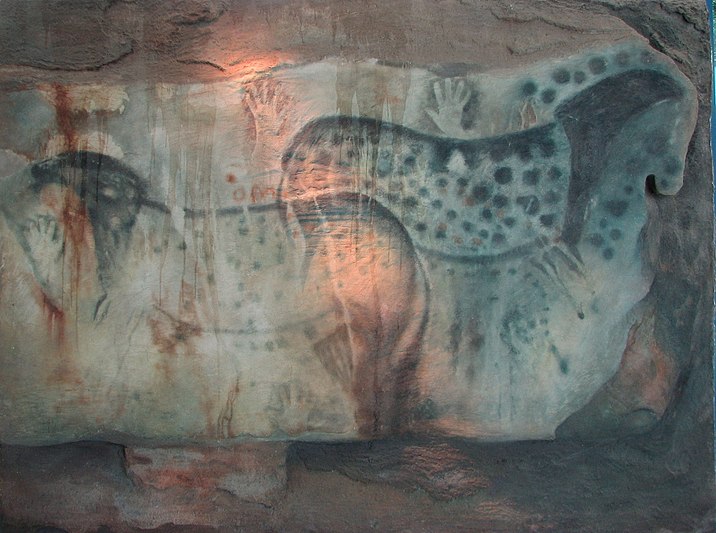
Turns out cave art wasn't a "guy thing", like has been predominately assumed. About three quarters of all cave paintings may have in fact been done by women, according to a new study.

By measuring the hand prints associated with cave paintings and analyzing them next to proportions of men and women's hands from populations of European descent, it was discovered that not only was there clear sexual dimorphism among the cave hand prints, there was also a predominance of female hands in the paintings.

These hand prints could mean anything, but a likely hypothesis is that they're used as an artist's signature. This gives an insight into early human culture that goes against common assumptions of gender roles in ancient groups. But it brings up a new question: why mostly women?


3. 441 New Amazon Species Discovered


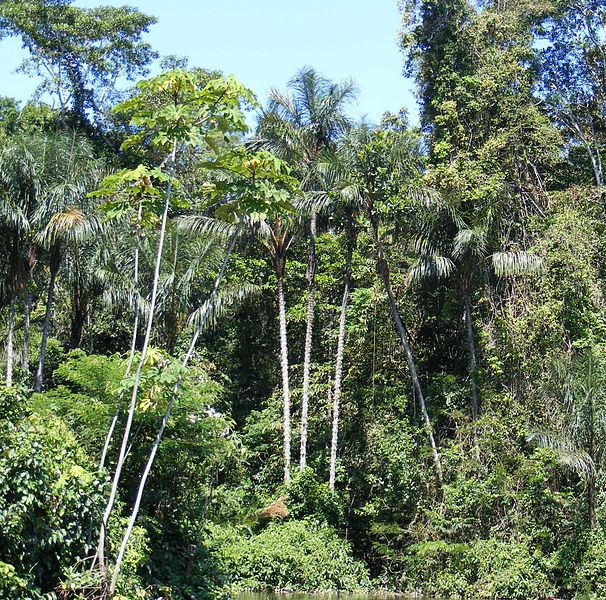
On expeditions over the past four years have lead to the discovery of over four hundred new species in the Amazon rainforest. Of course, most of these are already in danger because of the environmental issues that region faces.

Among the new species include a piranha that doesn't eat meat, a flame-colored lizard, and perhaps most adorably, a monkey with babies that purr to one another. You read that correctly. Purring baby monkeys. If you get nothing else out of this blog post, I hope you at least have now smiled.


4. Single Species for ALL Early Humans?

Old American Museum of Natural History human evolution tree. Source.

This has been all over the news lately. A new skull has been found that has features so varying, that it seems to unite all species of early Homo (the genus of primate that humans belong to) into one single species. No more Homo rudolfensis vs Homo habilis. Just one united species.

First of all, the scoop: a new early human skull has been found in the Dmanisi region of Georgia. It's 1.8 million years in age, and is known as "Skull 5". It's preservation is spectacular. It's part of a group of skulls that are often thought of as the earliest Homo erectus, as it changed from Homo habilis.

Now take a look at the 2 million year mark on the picture above. See all the various "Homo" skulls at that time? They got split into different species based on features that are constantly argued over by paleoanthropologists. There's an age-old debate here.

Were these really different species? (Argument: modern primates have more than one species in their genus, why shouldn't we have had the same in prehistory?) Or were these different skulls all from one species that had a huge variation in skull shape? (Argument: species today can be wildly varying within their own bounds, so why not us?)

The new skull favors the second of the two arguments. And despite my eyebrow-raising at how it's been reported in the media (hype will always be hype), I'm not going to lie, this is very exciting stuff. The new skull has a variety of features shared with "different" species of Homo, young and old, and in particular, contemporary.

Basically, the traits of skull 5 should not all be in one skull. By our current understanding, and especially by the "different species" argument, they really shouldn't. And yet, here we are. Put it with the other skulls from the site, and it just makes it worse. None of that stuff should be together! Or so we thought.

John Hawks, anthropologist and web-blogger, sums it up best:

The entire early Homo sample has barely more variability than is found within the single Dmanisi site, at a single time.

What this means is that over the hundreds of thousands of years that Homo was kicking around as an early genus, at one single time at this one site, skulls have just as much variation among themselves as the entire lot of the rest of the stuff that's ever been found anywhere. Huh. Well then.

Imagine if you had never heard of Skittles, and then found a red Skittle. Maybe two. And then a couple days later, in a different place, you found a green Skittle. And maybe a week, later, a yellow Skittle in a different town. You might start assuming that each place has its own color Skittle, or that only certain colors show up at certain times. But then there's the day you discover an actual bag of Skittles. And you realize they all exist together. That's kind of what's happening here.

So it is a big deal. And it's messing with my brain, because I've always been a big fan of distinguishing Homo rudolfensis and Homo habilis. But as we've learned with Denisovans and Neanderthals, it is possible for different groups of humans to interbeed, even if they look different from one another or have other genetic distinctions. So there are ways of explaining this. I'm just not sure how to fold it into my personal version of our family tree just yet.

.....

There were a ton of other cool stories this month that I wished I'd been able to highlight (one in particular, but I will get to that soon enough). Weekly Science Roundups will be back on track for November!

But first: SVP 2013.


Saturday, May 18, 2013

BILLION YEAR-OLD WATER


In a Canadian mine, scientists have found a source of flowing water deep within the Earth that's been untouched for at least a billion years. Some estimates say this water has been isolated for closer to three billion years.

Holy cow. I mean, HOLY COW. Do you know what this means?

This means this water could host life that's been isolated for millions of years, if not hundreds of millions. It could host entire ancient ecosystems! It could host microbes that have evolved in separation from the rest of the world for eons!

asd;fkjqwiefjiioeja4jrfaojs;fa;lskdfaowifjjo'aweojaoifdfsd!!!!!

Excuse the key-smash, but this is freaking awesome.

...Ahem. Right. Now for a bit of slightly calmer explanation:

The water is bubbling out of the deep Earth into a mine in Ontario. The water has been dated by examining the isotopes of the noble gases in the bubbles, and work is still being done to narrow down the date range.

No one has actually identified life in these samples just yet, but with the presence of hydrogen and methane, it's certainly possible for microbial life to exist in isolation in these conditions. It's actually a perfect experiment to learn more about the possibility of life on other planets. If life could've existed in these rocky traps with no connection to the atmosphere for millions of years, life in a place like Mars--that has these same ingredients--isn't a stretch of the imagination at all.

This is really exciting stuff, guys. Like, really really. In fact, rather than an entire weekly roundup, I felt this bit of news deserved a post all of its own. It's just that cool. Take a moment to appreciate this awesomeness. Seriously.

Okay, now you may go ahead and proceed with your Saturday.


Tuesday, March 12, 2013

It's Official: Mars Could Have Once Had Life

"A fundamental question for this mission is whether Mars could have supported a habitable environment," said Michael Meyer, lead scientist for NASA's Mars Exploration Program at the agency's headquarters in Washington. "From what we know now, the answer is yes." - NASA, 3/12/13

Curiosity, way to do your job like the amazing robot you are. There's a reason I love you so much.

Last August, we sent Curiosity to Mars with several missions--the main one being to determine if Mars had ever been habitable.

Image credit: NASA/JPL-Caltech/MSSS
Today, thanks to that awesome-tastic rover working just like we'd hoped, we have confirmation that it was.

Curiosity sampled sedimentary rock in the Gale Crater, drilling in to get a fine powder to analyze. A fine, grey powder. Not red.

Intriguing. At least, if you know that the grey powder indicates only partially oxidized chemicals, which were then confirmed upon the actual analysis. What does this mean, for non-science people? This means there could have easily been stuff for microbes to get energy from, such as sulfates. Microbe food, so to speak.

Curiosity has also demonstrated that the soil there isn't particularly acidic or salty, either. In fact, it's pretty much confirmed that the ancient streambed Curiosity's been visiting was a freshwater stream.

Sulfar, nitrogen, hydrogen, oxygen, phosphorus, and carbon have all been identified in this sample, which are all ingredients for life. Add that to the surprisingly un-harsh ancient environment of this streambed and the energy resources, and there you go: Mars officially had a point in its history where it would have been quite friendly to microbial life.

This means Earth was not alone in its raw potential for evolving life. Our neighboring planet could've done it, too.

Holy moly, the universe is freaking amazing. *FLAIL OF AWESOME*


Tuesday, November 20, 2012

We now interrupt NaNoWriMo because SOMETHING IS HAPPENING

JUST GO HERE. CLICK HERE NOW.

SERIOUSLY DO IT.

THERE IS COOL NEWS ON THE WAY, FOLKS.

ARE YOU EXCITED? BECAUSE I'M EXCITED. I DON'T KNOW IF YOU CAN TELL THAT OR NOT, BUT I AM.

CURIOSITY IS EXCITED, TOO. SHE HAS SOMETHING TO TELL US!

Wednesday, July 4, 2012

HIGGS BOSON (most likely) FOUND

They've made the announcement. It appears that the elusive Higgs boson particle has finally been found (OH MY GOD THIS IS AWESOME NEWS).

This is critical. This is a particle that physicists knew must exist, but no one could seem to actual observe it in any way.

Thanks to the Large Hadron Collider and a dedicated team of scientists working for years on this project, they can say with pretty much 100% certainty that they've found what they've been looking for. But what exactly is that? What is a boson, anyway?

To my understanding, bosons are particles that essentially account for all the forces we know, by interacting with each other and other particles, known as fermions. In the case of the Higgs boson, it can be thought of as the reason other particles have mass. That's a pretty important role to play in the universe, so it's obvious why the physicists on the hunt were so driven to find this particle.

Its existence was predicted nearly 50 years ago, and in that time many other particles of the "Standard Model" have been found and confirmed. The Higgs boson, however, held out. This was ridiculously frustrating, because the Standard Model depended on it (see image above).

So how do they know they found it? Well, by smashing protons together in the Large Hadron Collider, scientists observed what particles popped around after each collision, and did their best to measure them. And two teams, working independently to do such tests, have recently found a particle around 125 gigaelectronvolts in weight...which is just about exactly what the Higgs boson was predicted to weigh, and nothing else. Holy cow. SO COOL.

Major congratulations to all teams involved in this epic discovery. This is a monumental day for physics, and therefore a monumental day for everything in existence.

Perhaps my physics friend Andy would care to weigh in on this discovery in a future post, and his take on how this sneaky particle finally managed to be revealed...