Showing posts with label NASA. Show all posts

Friday, July 1, 2016

Juno: July 4th

Something is coming for Jupiter this Independence Day. 

No, that's not a tagline for a summer blockbuster. It's 100% reality! NASA's Juno Mission will reach the biggest planet of our solar system on July 4th of this year.

Artist rendition of Juno at Jupiter. Credit: NASA.

Launched in 2011, Juno has been traveling through space for nearly five years to reach the gas giant. One of it's biggest tasks is to actually reevaluate the "gas" part of Jupiter's "gas giant" status. There may be a (relatively) small solid core somewhere under all those storms!

In addition to determining if Jupiter has a solid core, one of Juno's other main priorities is to study the planet's magnetosphere. A magnetosphere is the region where interaction happens between a planet's magnetic fields and solar winds from our sun. Earth's magnetic fields help protect us from solar winds, and our resulting magnetosphere stretches 40,000 miles off the surface of our planet in the direction of the sun. Away from our sun, the tail direction of our magnetosphere stretches 370,000 miles!

Earth's Magnetosphere. Credit: NASA.

Jupiter's magnetosphere stretches out 2 million miles.

The big question is, how is Jupiter producing its magnetic fields? For Earth, we produce it by the convection of liquid iron in our planet's core. This movement results in flowing electric charges, which induce magnetic fields. But what is it inside Jupiter that accomplishes this same effect?

That question and more will soon be answered! Keep your eyes on space news this summer.

Thursday, December 31, 2015

Yearly Science Roundup: 2015

I couldn't let 2015 go without recapping my top science stories of the year! There were three standouts to me in 2015. As always, these are my personal choices, so this is a completely biased ranking. You have been warned.


3. Paris Climate Agreement

 
In an agreement that was better than expected--though not quite enough, scientifically speaking--the nations of the world promised to try and keep global temperatures from rising more than 1.5 degrees Celsius. Accountability is still shaky, but the U.N. agreement does state that nations must report their progress every five years.

Mayors from hundreds of cities pledged that by 2050, they would run their towns only through renewable energy. This will give a much-needed economic push to the renewable energy industries. But the reality is that fossil fuels remain the cheaper option unless nations move to tax them, which is unlikely.

The moral of the story is that the Paris Summit was a major step in the right direction, though naturally more steps are needed. I'm choosing to look on the bright side, though. Every journey takes many steps, so as long as we're walking forward, that's better than standing stubbornly still.


2. New Horizons Reaches Pluto


People might be surprised that this isn't my number one, and I admit it was a close call.

On July 14th, New Horizons flew past Pluto, going faster than any man-made object in existence. It took nine years to get out to the Kuiper Belt, where Pluto is located at the edge of our solar system, and collected a wealth of knowledge in a matter of hours--including our first ever up-close pictures of Pluto!

Scientists are learning a bunch from this mission, but my favorite thing about it was how excited it got the public about space exploration. Everyone loves Pluto, and when we finally got to "meet" the dwarf planet this year for the first time, we learned Pluto loves us, too! The big heart-shape is a plain of frozen glacial nitrogen, brilliantly reflecting sunlight from three and a half billion miles away. How cool! Literally!

As for my number one science story of the year...


1. HOMO NALEDI!!!


Sorry, space. The paleoanthropologist in me wins out this year.

This story had ME written all over it. A new relative of ancient humans. Cool caves. A team of all-lady scientists. Live-tweets (and blogs!) of the discovery. And more fossils than can yet even be COUNTED.

Yes, the discovery and publication of Homo naledi is my number one story of 2015. The Rising Star Expedition began two years ago when reports came of a cave that appeared to have human remains. From there, Lee Berger assembled a team to explore this cave and see just how much was down there.

Turns out...a LOT was down there. So far, over 1500 fossils have been collected, from about 15 individuals--several of which seem to have associated skulls/skeletons.

That...is MIND-BOGGLING. For perspective, less than 5 finds in the history of early human paleoanthropology have consisted of an individual with skull and skeleton bones together. And here, in this one cave, are so, so, SO many more. Adults, infants, elderly...all here.

The species was given the name Homo naledi, after the cave in which they were discovered. I was lucky enough to see models of them in person in October. The hands and feet of these early humans are astonishing--so similar to ours, even though they themselves were only the size of Lucy. Their hands could certainly manipulate tools, but their brains were close to that of a chimpanzee's. Additionally, the way the fossils are deposited suggests deliberate, perhaps ritualistic, disposal of the dead by other members of the species. WHAT?! Wow. We have a lot to learn about this new species, and it is going to greatly influence our understanding of human evolution.

The biggest question remaining is the age of the specimens. There is no easy way to deduce it, because of the nature of the find, but I have faith science will find a way. This is too big of a find not to put our best efforts towards.

There are still a ton more fossils down in the cave, but to access it, you have to be an incredibly brave spelunker--and incredibly small! One passage is only 8 inches wide. I can't wait to see what more comes from this find in the future, and am still just completely blown away by what's been found so far.


So there you have it. My top science stories of the year. Onwards, to 2016!

Saturday, October 18, 2014

Comet Siding Spring


Video credit - NASA/JPL

On Sunday, a comet is going to fly past Mars, so close that for a time, scientists wondered if it would hit the planet.

Should I repeat that?

On Sunday, a comet is going to fly past Mars, so close that for a time, scientists wondered if it would hit the planet.

This comet, named "Siding Spring" after the observatory where it was first detected, will get within 87,000 miles of the surface of Mars (three times closer than the Moon is to Earth). NASA has moved its orbiting satellites to the far side of Mars to shield them from the comet's tail of debris. On the surface, our rovers should be safe, thanks to Mars' atmosphere.

Presuming all goes well, all these instruments should be able to help us study this amazing comet. Comet Siding Spring comes from the Oort Cloud, which is a mess of ancient ice and rock at the edge of our solar system. This is the first time Comet Siding Spring is coming past the outer planets towards the Sun, so it is relatively intact (never been too close to heat), the same as it would've been during our solar system's formation 4.6 billion years ago.

Image credit: NASA.
For Comet Siding Spring, this is a one way trip. But for us, it's the journey of a lifetime. Thousands of lifetimes. In fact, the odds of a comet sailing by Mars is about once per millennia, if that.

If this had happened 50 or more years ago, we wouldn't have been able to study it.

If it had happened 40 years ago, we may have had one-ish orbiter in place, but next to no control to move that orbiter to a safe viewing spot.

Heck, if it had happened one month ago, we would have had only three orbiting satellites.

But it's happening NOW. We currently have five orbiting satellites. Plus two operational rovers on the planet itself.

This is going to be a spectacular chance to study an object from early in our solar system's formation, to better understand comets themselves (which have always been a tad mysterious to us), and to see what happens to a planet when something like a 5 mile wide space rock sails by.

So stay safe, MAVEN! Stay safe, MOM! Stay safe, MRO! Stay safe, Odyssey! Stay safe, Mars Express! And stay safe, Curiosity, Opportunity, and yes, even you, Spirit. We're all wishing you the best of luck in observing this amazing event. Please don't get too badly pummeled by any associated debris.

Sunday, September 28, 2014

While I've been away...

Long time, no blog. The last few months have been busy in abnormal ways, so I've been thrown off my routine. I'm finally catching up on life, so it's time to get back into the blogging game!

Celebration as MAVEN moves into orbit. Credit: Lockheed Martin
During the time I've been slacking on my blog, there were two things in the universe that were notably not slacking off--NASA's Mars Atmosphere and Volatile Evolution craft (MAVEN) and India's Mars Orbiter Mission (MOM).

After 10 months of space travel, MAVEN entered into orbit around Mars one week ago. MOM had traveled for a similar amount of time, and entered into orbit just days later. Both of these spacecrafts have made huge strides for science and space travel.

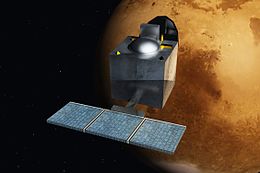
Artist's conception of MOM.
MOM is India's first interplanetary mission, and was launched to simultaneously test out their space travel technology and also set into orbit another piece of scientific equipment around Mars. MAVEN, on the other hand, was launched by NASA with one particular burning question in mind: what happened to Mars' atmosphere?

Mars is incredibly similar to Earth, with one glaring difference being its lack of reasonable atmosphere. Once, however, Mars had a thicker atmosphere. NASA wants to know what changed, and could it ever happen to us. MAVEN is designed with a set of specialized instruments to try and answer this mystery.

Artist's conception of Siding Spring passing by Mars. NASA.
Both of these spacecraft have reached Mars just before an incredibly rare event is set to take place. The Siding Spring comet is due to fly past Mars on October 19th, peppering the surface of the planet with meteorites and flying closer to Mars than the Moon is to Earth. NASA has worked tirelessly to ensure all the orbiters and rovers will safely make it through this major event, and presuming all goes well, every piece of equipment NASA has on and around Mars will get a chance to study this comet as it flies by. This is an incredible opportunity to not only learn more about comets, but learn what happens to a planet when one gets this close!

Basically, Mars is taking one for the team, and we're lucky enough to have had prep time to move our equipment to safe locations.

Expect a more usual blog schedule to resume as the fall goes on, and updates on the entire comet situation as it draws closer!


Thursday, June 12, 2014

Spring Catch-Up: Science Roundup

It's no secret that my Weekly Science Roundups fell by the wayside with the rest of my blogging. As I continue to play catch-up on all the events of Spring 2014, I absolutely did not want to miss out on the science! So here's four of the coolest science stories from the past two months.


1. Kepler Mission Extended (and Revised)

NASA

Last year the exoplanet-hunting telescope, Kepler, was forced into retirement by a busted wheel in it housing. However, most of its equipment was still functional and NASA deemed it a waste to just let it all drift out there doing nothing.

Thus "K2" was born. A new mission for a repurposed telescope. K2 will still be on the hunt for exoplanets, but will do so from only one plane of observation, rather than being able to move between planes. It's basically missing an axis to move along because of that broken wheel. Regardless, it's still one of the best pieces of technology ever sent into space, and I'm positive it will continue to advance science even with this handicap.

Go, K2, Go!


2. Teenager's 12,000 Year-Old Skeleton Sheds Light on American Ancestry

NOAA

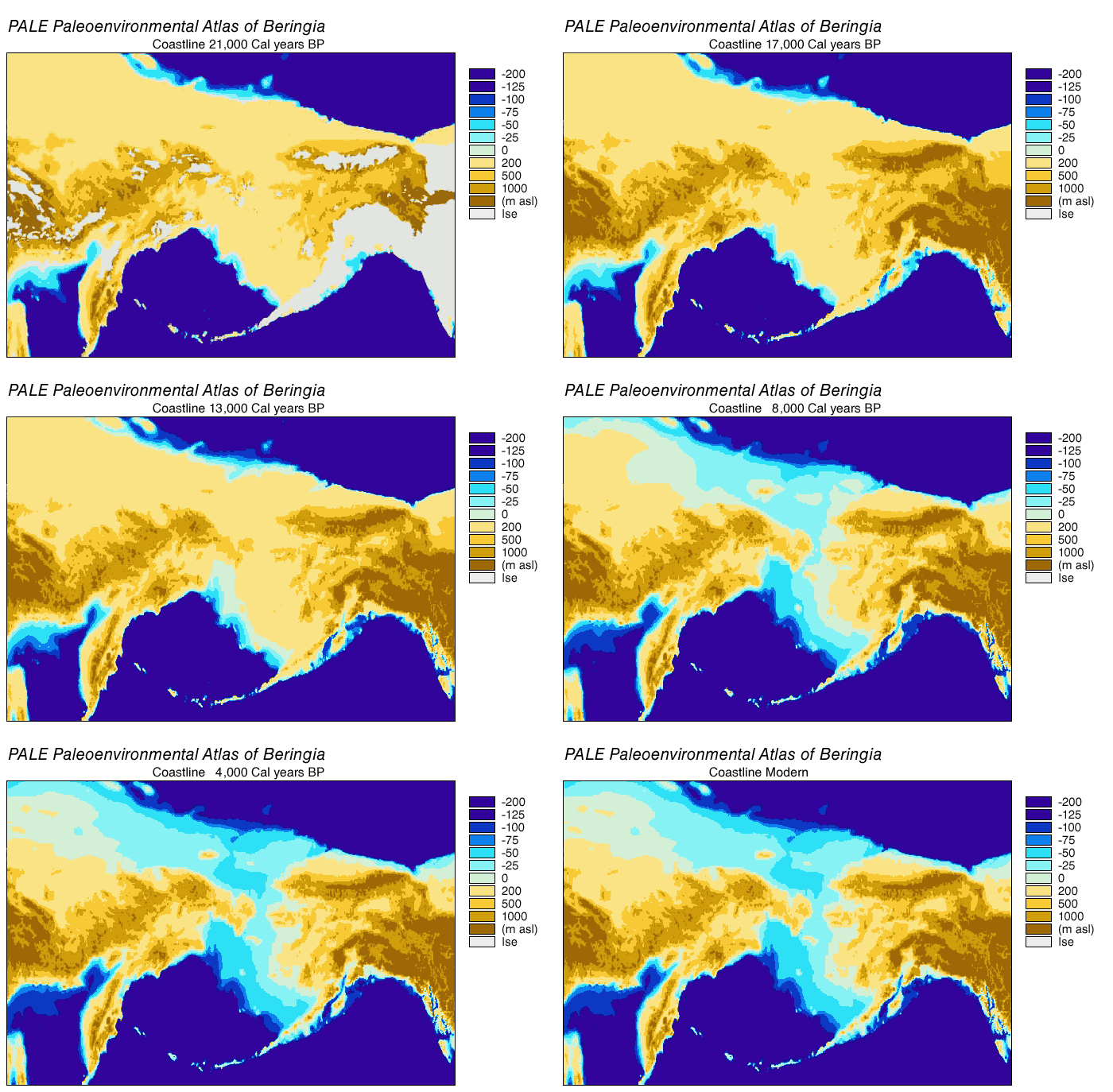
Ancient Americans--or "Paleoamericans"--crossed the Bering Land Bridge between Asia and North America around 20,000 years ago. Despite Paleoamericans and modern Native Americans physically appearing less alike than one might logically guess, a new find has shown that they are genetically very similar.

The discovery is of a 15 year-old female skeleton, dating back over 12,000 years, found in Mexico. She shares a genetic haplotype with modern Native Americans that is found in no other ancient lineage.

What this means is that there wasn't a second (at least, a second major) migration that brought in the ancestors of Native Americans--their populations are almost certainly descended from these original Paleoamerican cultures. The differences in physical appearances is likely just an artifact of deep time.

This, by the way, is the second major genetic study this year to link these populations.


3. Quantum Teleportation a Reality?
Subatomic structure of a neutron.

Quantum teleportation. Just say those two words out loud for a moment. Congratulations. You officially sound awesome.

But what the heck did you just actually say? Well, turns out what you said is actually something real.

The idea behind it is that we are all made of atoms arranged in particular ways, and inside the atoms are subatomic particles arranged in particular ways. As such, if we just make some particles over there arranged in the exact same way, we have achieved teleportation. And thanks to the idea of entanglement, where "entangled" particles can influence each other from far away, distances can be overcome easily. So to speak.

Just a fun thought experiment? Nope. Again, this is real. They've done it. They actually teleported a small amount of information ten whole feet.

It's a baby step, to be sure, but theoretically this could grow to be much, much more. One end result may be Quantum Computing--an internet-esque network of machines that could someday make today's networks look like molasses.


4. Evidence for Explosive Moon Formation Theory

NASA

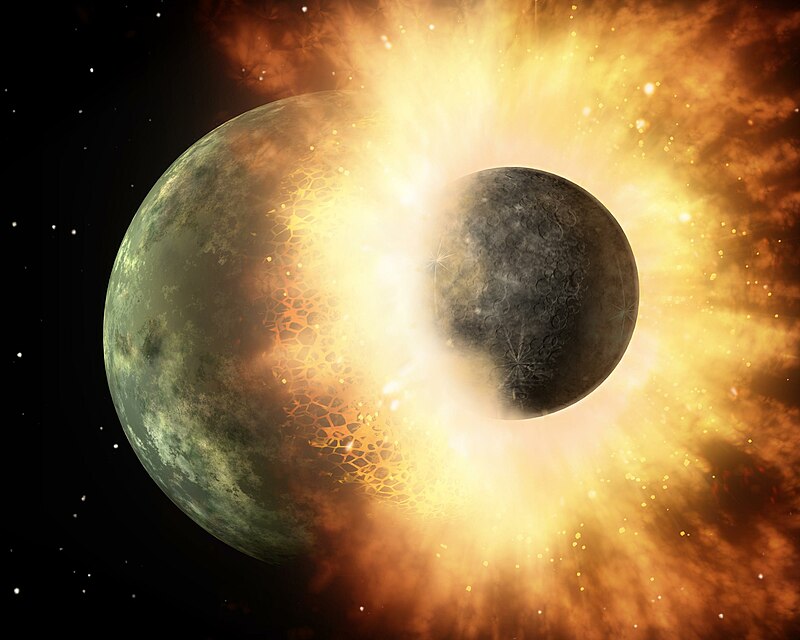
So the story goes like this: Over 4 billion years ago, Earth was slammed into by an object the size of Mars. We call this planet-y thing "Theia". Our moon formed from parts of Earth and parts of Theia. (Gravity + time + lots of mass = round things)

Now there's finally proof that story actually happened. A chemical analysis of moon rocks has detected a different kind of oxygen isotope than is found on Earth, indicating an external source.

This shows that the moon wasn't just formed from the same exact cloud of dust and spacerock that Earth came from. 30-50% of it was from something else. It's concrete evidence that another major body was at play in the moon's formation.

Theia was really out there once.

I love when awesome hypotheses get shown to be right.


Monday, April 14, 2014

In Case You Missed It: SPACE News Recap!

There's a lunar eclipse coming up tonight, and in honor of that I'm going through and listing all the cool space-related science stories I've missed in these last two months.

Here we go, in order of announcement...

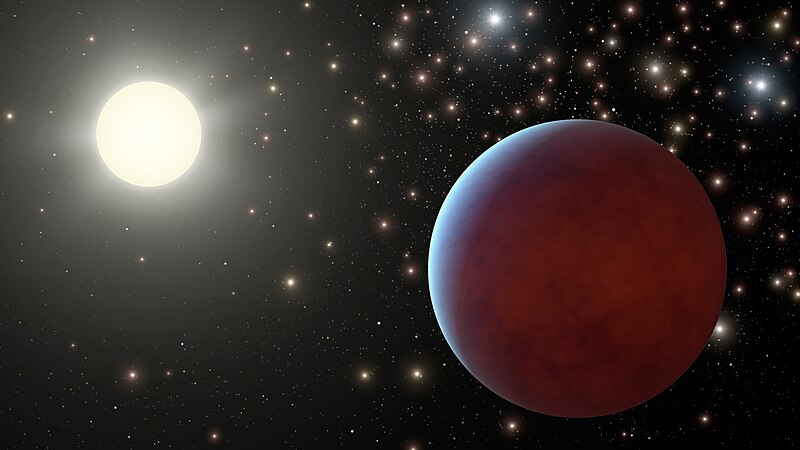
  1. There was a massive increase in the number of confirmed exoplanets--aka planets that orbit stars other than our own. The 715 new planets found by the Kepler Space Telescope have upped the exoplanet count to almost 1700 known worlds. Many of those come from multi-planet systems, like our own solar system.

  2. A huge star was found. Really huge. Top ten biggest ever, and number one biggest "yellow" star. Our sun is classified as yellow, but this star is 1300 times the diameter of our's, and is referred to as a "hypergiant". It's also in a binary system, and its companion star is so close that it's basically touching. 

  3. The first moments of the cosmos had extremely rapid expansion. Scientists have found concrete evidence for the Big Bang. Cosmic background radiation has shown "gravitational waves" that left a mark during the intense inflation right at the beginning of the universe. It's a signature that can't be mistaken. This is really big news, guys. Like...really big.

  4. Sedna's location, for reference.
    A new dwarf planet may have been discovered. Like Pluto, it's small and icy, and like the wacky Sedna, it has a bizarre orbit that takes it far, far away from the sun. Way farther than Pluto. Almost reaching the Oort cloud. So how is it held in orbit at all? That's a mystery scientists are eager to dig into. Watch for more far-out dwarf planet discoveries in the near future.

  5. Two rings were found around the asteroid Chariklo, making this the first asteroid that we know of to have its own rings! It's likely that these rings were formed from some kind of collision event in the past.

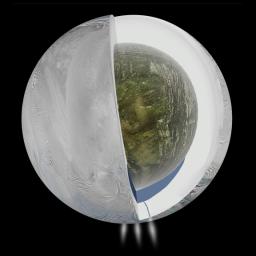
  6. Enceladus has an ocean! With geysers!
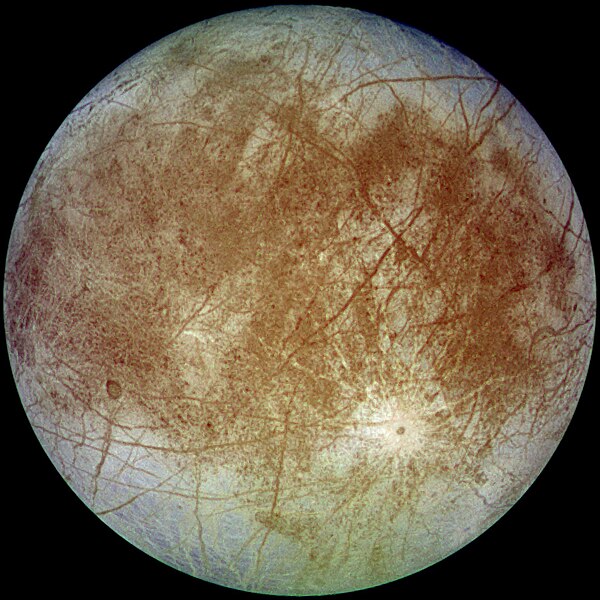
    Saturn's moon, Enceladus, has liquid water! Much like Jupiter's moon, Europa, under the icy surface of this world there is a massive ocean. It is warmed by the frictional tidal pull of the huge gas planet it orbits. Cassini--the mission NASA has out by Saturn at the moment--has already shown that water ejections from the planet contain salt and organic molecules. These are the ingredients for life. This ocean has just become one of the top candidates in the solar system for aliens! 

  7. There's new evidence that an absolutely enormous asteroid may have impacted Earth 3.26 billion years ago. This thing might have been five times the size of the space rock that hit at the end of the Cretaceous. It would've boiled oceans and vaporized rock. Vaporized rock. That rock vapor would've been flung into the atmosphere and rained back down as liquid before freezing back solid on impact. WOW.

  8. A possible exomoon has been discovered. So far, no moons orbiting exoplanets have been discovered, but it stands to reason that they're out there. Unfortunately for this discovery, it's unclear if the objects in question are a giant gas planet and a big moon, or a very tiny star and an exoplanet. With current technology, there's no way to tell which it is. But it does give the first bit of hope that exomoons are out there.

  9. And of course, speaking of moons, tonight we have a total lunar eclipse. It will last from approximately 3am (EST) to 5am on April 15th, if you're willing to be up then to watch for it. It's the first of four lunar eclipses we'll be getting between now and Fall of 2015, so if you miss it never fear--you may have more chances, depending on your local weather!

Phew! I think I hit most of the big stuff. Life became busy, and blogging got pushed aside. Hopefully I'll have more time for it this month, but for now I'm glad I at least got to catch up on all this space news. So much happened in such a short stretch of time!

Saturday, March 29, 2014

Getting Inspired at the Kennedy Space Center

Last week, I got to visit the Kennedy Space Center at Cape Canaveral for the first time. It was amazing, inspiring, and the perfect day trip to take while visiting my parents in Florida.

For those not in the know, the novel that landed me my agent is a realistic space adventure that takes place in the not-too-distant future. The KSC was the perfect place to go to gain a better understanding of what a real space center layout might be like, what rockets and shuttles look like up-close, and what kind of equipment astronauts really use while up in space. I took loads of pictures, some of which you'll see in this blog post, but the majority of which you will not. (Trust me, you don't want to see them all. There are a lot.)

Obviously I've done loads of research on my own before this trip, but there's something about seeing an actual space shuttle in person that no amount of youtube videos or NASA photos can prepare you for. It's just awe-inspiring. I teared up when I first saw Atlantis. The entire time I walked around it, I think my mouth continuously gaped--not just at its size, but at what it represented. It's one of the most beautiful things I've ever had the luck to be near.

A lot of authors go on research trips to better understand their character's worlds. Unfortunately, when a good chunk of your novel takes place off-planet, that's kind of impossible for me. That's why this trip was so incredibly valuable. From shuttle airlocks to astronaut tool kits, I now have reference points for so much! It's unbelievably awesome, and it's going to flesh out my novel that much more.

On top of that just seeing cool stuff, I got to ride the "Launch Experience" simulator, which takes you through what it's really like to blast off. It's not just a gimmick, either. It teaches its riders first about each stage of the launch, and what things will feel like at every point along the way prior to actually participating in the simulation. Perfect! I made mental notes of every tilt, shake, and ear-crushing roar I experienced. I can't wait to incorporate them.

In addition, I got to sit in replicas of shuttle cockpits, mime out the movements of a real spacewalk, and went on a behind-the-scenes tour to see the entire base. The scale of operations was mindblowing, and has given me so much fodder for the layout of my novel's primary setting.

Atlas V rocket, waiting to launch another day.
The only thing I didn't get to see was a rocket launch. One had been scheduled for the day we were visiting, but had to be delayed due to technical difficulties. We did get to see the rocket at the launch platform, though.

Regardless of the lack of launch, this research trip was oodles of fun and so, so informative. I spent the entire 3 hour plane ride back home scribbling notes and ideas of what to tweak in my novel to improve the realism, up the stakes, and make the journey my characters take even more exciting than what it already is.

If you've been bouncing around the idea of doing some in-person research for your novel, I can't recommend it enough. And if you've ever thought about visiting the Kennedy Space Center just for fun, do it! My dad and I had a wonderful day together and learned so much. Can't wait to visit again someday in the future!

Dad and I in front of the absolutely massive VAB (Vehicle Assembly Building). My novel needs one of these.


Saturday, March 15, 2014

Education Takes a Hit in Proposed NASA Budget

Ugh.

Let me just repeat that.

Ugh.

NASA's proposed 2015 budget isn't making many people smile, that's for sure. With cuts to planetary science (let's stop studying climate change, shall we?) and reallocation of funds from missions like Opportunity to cover the costs of missions like Curiosity (while we're at it, let's sacrifice one rover for the sake of the other!), there isn't lot of good news out there.

But to me, the worst news of all is the severe cut in education funds. It's taking a 25% hit. Reducing education by a quarter. Are you kidding me?

Ugh.


NASA's budget video shows a group of curious kids learning how to play with rockets. Look how cute they are! So inspiring! Now let's take away one out of four of those kids. No space education for you! Reducing the number of people who understand space and technology is surely the best way to move our country forward!

Now, that's obviously an oversimplification of the problem, but the fact remains that someone thought it was a good idea to have NASA cut back on teaching people about what they do. That means this burden falls on us science education professionals in non-profit, non-government institutions. We do our best. We really do. But the further you go from separating the science and the scientists from the public, the bigger the gap is going to be in public understanding.

Who are you more likely to listen to? "I am from a science museum, let me tell you about the newest space mission!" or... "I am from freakin' NASA, let me tell you about the newest space mission!"

This isn't to say that us non-profit science institution folks don't know what we're talking about. It's our job to know, and we generally rock at it. But the level of impact changes when it comes from us, as does the level of connectedness.

If you keep laypeople away from scientists, you get problems. This is the same issue that comes from big-wig scientists not knowing how to communicate to the public. This is the same issue that results in people's lack of understanding about evolution and climate change. This is the same issue as to why the U.S. is ranked so low in the general population's understanding of science.

We just don't put real importance on it.

This problem is why I do what I do. It's why I'm a science communicator--to help every day people understand the field of science. But us science educators can't shoulder this burden alone. We're under enough pressure as it is. I've been to schools where I've been told I am their science lesson for the year. A one hour assembly, and that's all the science they're going to get, so I better make it count. No joke.

Cutting education should never, ever be the answer.
There might be aliens here.

...Ugh.

The one part of this budget plan which doesn't make me cringe is that they're allocating some money to look into a mission to Europa, Jupiter's icy moon. It's long been speculated that under its icy crust, down in its giant oceans, our best bet at finding alien life may lurk. Trying not to be too giddy that this kind of mission might actually happen in my lifetime.

This budget hasn't been approved yet, so more changes may come. We can only hope NASA gets the funding they ask for at the very least, and that more cuts don't need to be made. NASA's only asking for less than half a percent of the entire 2015 budget. Less than half a percent to take our nation into the future. Imagine what we could do with a full 1 percent.

Actually don't. Because you'll just get disappointed that it'll never happen.