Showing posts with label Yearly Science Roundup. Show all posts

Friday, December 30, 2016

Yearly Science Roundup: 2016

It's that time again. Time to look back at the year and sum up what amazing science happened!

These are my personal five picks for the top science stories of 2016. Three of them are space-related, which is only fitting with my space-themed debut novel coming out next year. Feel free to chime in down in the comment section with your own top picks, if they aren't on this list.

Anyhow, without further ado, here we go!

5. Proxima b

Image by ESO/M. Kornmesser

This past August, the European Southern Observatory reported the discovery of an Earth-like planet orbiting the star nearest to our own. Finding new exoplanets isn't as surprising as it used to be, but it's still super exciting to find one this close to our own place in space!

This planet orbits Proxima Centauri, a star only 4 light-years away. It is in the habitable zone, meaning it could have liquid water on its surface and temperatures within the range of our own here on Earth. It is 1.3 times the size of our planet, and probably rocky. To get there with modern technology would still take us 70,000 years, but folks are already planning ways to do it faster!


4. A Sappy Dino Tail

Credit: R.C. McKellar, Royal Saskatchewan Museum

This wouldn't be a Top 5 list from me without something prehistoric on it. It was hard choosing which paleontology story I was most excited about in 2016, but in the end, I had to go with the dinosaur tail stuck in freaking amber.

This amazing find came from Myanmar, and dates back to 99 million years ago. CT scans of the tail inform its classification as a dinosaur, but the type of feathers suggest it likely was not capable of flight. Also lodged in the amber with the tail was an ant, who unlike the dinosaur, didn't get away.


3. We Have LIFTOFF LANDING!


In a moment I'll never forget, on April 8th, SpaceX successfully landed its reusable Falcon 9 rocket booster on a drone barge in the middle of the Atlantic after launching it from Florida. This is a stunning example of engineering at its finest.

I'm so excited about this, you guys. The destruction of rockets during launch has been an expensive barrier for many missions. If the boosters can be reused, this opens the doors to an easier, more economical future for space travel! What an accomplishment.

(Oh, and also, it just looks really cool to see a rocket land on a flat boat in the middle of the ocean.)


2. Gravitational Waves are Real

Aerial shot of LIGO

In what is topping the list for many other sites, I have decided that this discovery will be my 2nd choice for Top Story of the Year. But it is really freaking awesome, so don't think I don't love it.

Decades ago, Einstein predicted this discovery. The concept is that when two massive objects accelerate around one another, such as during the merger of two black holes, it will cause gravitational ripples in the universe, like a stone dropped in a pond. These ripples will actually expand and compress spacetime itself. But how to test it?

Well, LIGO (the Laser Interferometer Gravitational-Wave Observatory) had the answer. Have two lasers in equal-lengthed tunnels aimed at a 90 degree angle from one another. Measure them carefully. And wait.

This year, LIGO observed that one tunnel's laser measured a different distance than the other's for a moment in time. One laser registered as shortening, while the other as lengthening. This compression and extension indicated that spacetime was distorted during the measurements. (And this has been replicated!) Gravitational waves have passed through! They're real, and Einstein was right...again!

This has been a discovery 50 years in the making. So why isn't it my #1? Well, let's get to it and find out.


1. The Antarctic Ozone Hole is Healing

Image credit: NASA

My top science story for 2016 is one of hope, in a time when we really, really need it.

The Antarctic Ozone Hole, which forms every year in the spring when a chemical reaction occurs in the atmosphere, is finally getting smaller. This comes nearly 30 years after an international treaty was signed to reduce the use of ozone-destroying compounds in industry.

As a kid, this was the biggest environmental crisis of the time. Years before I learned about global warming, my worries were focused on the hole in our ozone. It seemed impossible to fix it. All we could try to do, from my childhood understanding, was not make it any worse. Even that, however, sounded farfetched.

But we are fixing it. We're doing it! Intense public outreach about this issue, and some serious worldwide cooperation, is to thank for this environmental disaster being reversed. I had to make this my number one story, because it is proof that we can work together to change how we do things and save our planet from catastrophe.

Let's push forward, and fight for similar changes on other environmental fronts in 2017 and beyond. This should be a lesson to all of us, and a beacon of hope. We're succeeding with one major fight. We can succeed with others!

Let's do this, 2017!

Thursday, December 31, 2015

Yearly Science Roundup: 2015

I couldn't let 2015 go without recapping my top science stories of the year! There were three standouts to me in 2015. As always, these are my personal choices, so this is a completely biased ranking. You have been warned.


3. Paris Climate Agreement

 
In an agreement that was better than expected--though not quite enough, scientifically speaking--the nations of the world promised to try and keep global temperatures from rising more than 1.5 degrees Celsius. Accountability is still shaky, but the U.N. agreement does state that nations must report their progress every five years.

Mayors from hundreds of cities pledged that by 2050, they would run their towns only through renewable energy. This will give a much-needed economic push to the renewable energy industries. But the reality is that fossil fuels remain the cheaper option unless nations move to tax them, which is unlikely.

The moral of the story is that the Paris Summit was a major step in the right direction, though naturally more steps are needed. I'm choosing to look on the bright side, though. Every journey takes many steps, so as long as we're walking forward, that's better than standing stubbornly still.


2. New Horizons Reaches Pluto


People might be surprised that this isn't my number one, and I admit it was a close call.

On July 14th, New Horizons flew past Pluto, going faster than any man-made object in existence. It took nine years to get out to the Kuiper Belt, where Pluto is located at the edge of our solar system, and collected a wealth of knowledge in a matter of hours--including our first ever up-close pictures of Pluto!

Scientists are learning a bunch from this mission, but my favorite thing about it was how excited it got the public about space exploration. Everyone loves Pluto, and when we finally got to "meet" the dwarf planet this year for the first time, we learned Pluto loves us, too! The big heart-shape is a plain of frozen glacial nitrogen, brilliantly reflecting sunlight from three and a half billion miles away. How cool! Literally!

As for my number one science story of the year...


1. HOMO NALEDI!!!


Sorry, space. The paleoanthropologist in me wins out this year.

This story had ME written all over it. A new relative of ancient humans. Cool caves. A team of all-lady scientists. Live-tweets (and blogs!) of the discovery. And more fossils than can yet even be COUNTED.

Yes, the discovery and publication of Homo naledi is my number one story of 2015. The Rising Star Expedition began two years ago when reports came of a cave that appeared to have human remains. From there, Lee Berger assembled a team to explore this cave and see just how much was down there.

Turns out...a LOT was down there. So far, over 1500 fossils have been collected, from about 15 individuals--several of which seem to have associated skulls/skeletons.

That...is MIND-BOGGLING. For perspective, less than 5 finds in the history of early human paleoanthropology have consisted of an individual with skull and skeleton bones together. And here, in this one cave, are so, so, SO many more. Adults, infants, elderly...all here.

The species was given the name Homo naledi, after the cave in which they were discovered. I was lucky enough to see models of them in person in October. The hands and feet of these early humans are astonishing--so similar to ours, even though they themselves were only the size of Lucy. Their hands could certainly manipulate tools, but their brains were close to that of a chimpanzee's. Additionally, the way the fossils are deposited suggests deliberate, perhaps ritualistic, disposal of the dead by other members of the species. WHAT?! Wow. We have a lot to learn about this new species, and it is going to greatly influence our understanding of human evolution.

The biggest question remaining is the age of the specimens. There is no easy way to deduce it, because of the nature of the find, but I have faith science will find a way. This is too big of a find not to put our best efforts towards.

There are still a ton more fossils down in the cave, but to access it, you have to be an incredibly brave spelunker--and incredibly small! One passage is only 8 inches wide. I can't wait to see what more comes from this find in the future, and am still just completely blown away by what's been found so far.


So there you have it. My top science stories of the year. Onwards, to 2016!

Tuesday, December 30, 2014

Yearly Science Roundup: 2014

It's that time again. Time to do the impossible and select my top five science stories of the year. After much deliberation, I've settled on the following:


5. A Swimming Dinosaur


Credit: Mike Bowler.

Spinosaurus splashed into headlines this year, when new research indicated that its skeleton had limbs suited for swimming. Most of this dinosaur was lost to science for almost a century, but then new fossils were found in Morocco that gave paleontology a more complete picture of this animal. This is the first time a non-avian dinosaur has been shown to have adaptations for a semi-aquatic lifestyle, and that earns it a place in my Top 5. For more information, check out my SVP blogpost from a few weeks ago.


4. Earth Is Not Alone

Enceladus. Credit: NASA.

The more we learn about space, the more we find we have in common with other worlds. In 2014, we learned Enceladus, a moon of Saturn, has oceans of water below its surface. We also learned that Europa--a moon around Jupiter that we've known to have liquid water under its surface--also has tectonic plate movements. It's the first body beyond Earth to demonstrate these! Meanwhile, Curiosity found the building blocks of life on Mars, and we finally found a rocky exoplanet that's in the Goldilocks zone of another star (where it's not too hot or too cold for liquid water) and is similar to the size of Earth. Wow!

Every single one of these things deserves its own post, but I only have 5 slots, so I was forced to clump them together. Regardless, if we learned all of this in 2014, I can't wait to see what we learn about space in 2015.


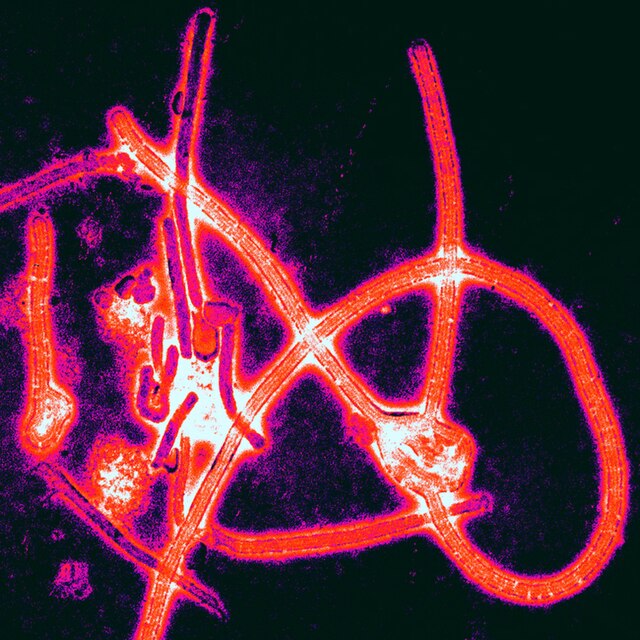
3. Ebola Outbreak

Ebola virus, color-enhanced. Credit: T.W. Geisbert.

There's no nice way to put this. Over 6,000 people died this year from Ebola, and over 17,000 were infected.

Past outbreaks had deaths numbering in the dozens, and more rarely, the hundreds. This outbreak was like nothing ever seen before, and most of it can be attributed to poor health care methods. There is no real cure for this virus other than helping a patient through their symptoms, which means assisting patients at their most contagious stages. Healthcare providers rapidly became patients themselves this year. There is an intense effort now to find treatments and vaccinations to prevent this type of outbreak from ever happening again, and to continue to find better ways for workers to aid patients without risking infection themselves. Hopefully, some of these problems will be solved by medical science in the near future so I'll never have to write another post like this again.


2. We Landed on a Comet, and Avoided Another!


Cheers upon hearing of Philae's landing. Credit: ESA.

In 2014, we landed scientific equipment on a comet, and saved other scientific equipment from getting beaned by one. I think that's pretty great, which is why it's so far up on my list.

On November 12th, Philae touched down on Comet 67P, making the ESA's Rosetta Mission a success. Thanks to this mission, we've learned that at least on this type of comet, the frozen water it carries is a different form than the kind found on Earth. This makes it unlikely that these comets were the depositors of the initial water on our planet, which is pretty big news. We also got to hear what a comet's magnetic field sounds like, which is just plain awesome.

Meanwhile, a few weeks earlier than Philae's touchdown, Mars was dodging the bullet of Comet Siding Spring. Five satellites had to be moved to avoid the debris this comet would bring as it sailed within 87,000 miles of the surface of Mars, including the new MAVEN and MOM missions. Mars survived, our equipment survived, and here on Earth, some people took some pretty great pictures.


1. Half of All Wildlife Dead


We're doing this.
And for one last, sobering entry, we have this news. According to the latest research and counts from the World Wildlife Fund, over 50% of all wildlife has died in the last 50 years. That's not an exaggeration. This is the reality we're living in. Please let that sink in. Half of all wild things have died in less than a single human lifetime.

It is up to us to make the changes necessary to slow this decline.
“High-income countries use five times the ecological resources of low-income countries, but low income countries are suffering the greatest ecosystem losses,” said Keya Chatterjee, WWF’s senior director of footprint. “In effect, wealthy nations are outsourcing resource depletion.”
This isn't an issue for future generations. This is happening now. By us. In 2015, make it a resolution to do something about this. I won't pretend to tell you what you should do, other than to please not forget that our world is in our hands, and we are letting it slip away. I know I post a lot about great space stuff, but I never lose sight of the most important planet: ours. It's why it's the back drop for my entire blog.

Please. In 2015, make it a personal goal to be a better tenant of Planet Earth. I'll leave my blog posts of 2014 on that note.

Tuesday, December 31, 2013

Yearly Science Roundup: 2013

We've reached the end of the year, and it's time to round-up the best of science from the past 365 days. It hasn't been easy narrowing down my favorite five science stories of 2013, but after a lot of thought, I've settled on the following:


5. Voyager 1 in Interstellar Space


Alright, so this technically happened in 2012, but NASA only confirmed it in 2013, so it counts! I've made it my #5 story, though, since it's semi-cheating.

Thirty-six years ago, Voyager 1 launched from Earth. As of August 25th, 2012, it officially reached interstellar space (...though it is still considered to be in our solar system, as it will be another three centuries before it even begins to touch the Oort Cloud). Congratulations, Voyager!

Scientists were able to detect this major milestone by noticing the change in density of the energy particles surrounding the spacecraft. Basically, Voyager 1 is now surrounded by particles ejected from other stars, and has moved beyond the bubble of particles ejected by our sun. It has entered the "space between the stars".

Which is pretty freaking amazing. Definitely one of the coolest things humankind has ever done. If you do nothing else in your last hours of 2013, take a moment to appreciate that there is a human-made vehicle hurtling beyond the edge of the sun's influence as we speak.


4. Biggest Volcano on Earth Discovered

Location of Tamu Massif, the biggest volcano on our planet!
Geology nerd time. Back on Planet Earth, scientists have discovered a volcano that completely blows the old record for "largest volcano" out of the water. (I made a joke! Get it? ...No? Read on...)

Tamu Massif is an underwater volcano off the coast of Japan (get it now?!). It was previously thought to be an area of many smaller volcanoes, but new evidence shows that it's actually just one really, really big one. It's FIFTY times larger than Mauna Loa, which up until this year had been considered Earth's biggest volcano. (Mauna Loa remains Earth's biggest active volcano, however.)

Tamu Massif is about 75% the size of the solar system's biggest volcano, Olympus Mons (on Mars). Lucky for us, it's been dormant for 144 million years, and doesn't look like it'll ever erupt ever again.


3. Hominins...Hominins Everywhere!


What a year in Human Evolution. With DNA studies galore throwing new surprises left and right, including new origins for Native Americans, a new species of human ancestor, and Neanderthal-inherited immunities, and then the whole debacle with the Dmanisi skulls throwing everything we know about speciation 2 million years ago into question...

...it's been quite the year.

But I think my favorite thing has been the exploration of the Rising Star Cave in South Africa. This expedition, led by paleoanthropologist Lee Berger, has already become one of the most successful of all time, and is certainly the most successful for the amount of time spent excavating in this cave.

Over 1000 hominin fossils have been recovered in just a matter of weeks. This is unlike anything paleoanthropology has ever seen before. The science of these fossils is yet to be done, but the sheer numbers are mindblowing. Check out this discussion with Lee Berger to hear the amazing story from beginning to end.


2. A Universe of Water

Artist rendition of a water plume on Europa.

Okay, so you've caught me. Picking five stories was impossible. Just like in the #3 slot on this list, the #2 slot is shoehorning in several stories.

2013 saw a huge increase in our understanding of where else water may be in our galaxy. Outside of our solar system, over 1000 exoplanets have been identified, and Hubble has detected water in the atmospheres of five of those so far. This is HUGE. Trying to detect water in the atmosphere of planets out of our own solar system has been a goal for a long time. Just imagine what we'll know about exoplanets by this time next year!

Back in our solar system, Hubble has found water in plumes from Europa, a moon of Jupiter that is thought to have giant oceans under its icy surface. And on Mars, Curiosity has been going strong. From water in the soil, to the discovery of an ancient freshwater lake, Curiosity has proven that there were once places on Mars that were perfect for the existence of life. And, in case anyone has forgotten, determining if Mars could've been suitable for life was the main goal of Curiosity's mission.

Here on Earth, water is so commonplace, you'd never think it'd make the news. But even here water made headlines, when some ridiculously old H2O was found in a Canadian mine. This water dates back 2 BILLION years, and is teaching us all sorts of things about the chemistry of that area from that time.

But even all of this excitement can't top what thrilled me most in science in 2013. Without further ado, I give you the absolute coolest science story of the year...


1. A FREAKING METEOR EXPLODED OVER RUSSIA!


THIS WILL NEVER NOT BE AMAZING.

Seriously, guys. This actually happened. I've done three different blog posts about this event already this year. I will talk about this until the end of time.

Because seriously. THIS HAPPENED.

If you want to read about the science of it, I suggest you check out my original post from February 15th. Or my follow-up post, the day after. Or my post about the origins of this space rock from August. Any of those will do. For now, though, I'd like to wrap up my 2013 blog with this gorgeous picture, supplied by NASA.


Happy New Year to everyone out there! May 2014 bring us more science excitement, a new batch of amazing discoveries, and at least one neat thing to smile about each day.


Monday, December 31, 2012

Yearly Science Roundup: 2012

A lot of neat stuff has happened this year in the world of science, and it wasn't easy narrowing things down. My weekly roundups include three cool things per week, but since this is for the entire year, I've decided to go with my personal favorite top five science stories for 2012. Enjoy, and have a Happy New Year!


5. The Transit of Venus


With the next transit over 100 years away, this was our generation's last chance to get to see our neighboring planet Venus in full daylight.

Really full daylight.

In fact, you couldn't even view it without safety equipment, because Venus was crossing the path of our Sun. The transit occurred on June 5th, 2012 and I was extremely lucky to get to see it happen. I live in Boston, which was completely cloudy that day, but happened to be on vacation in California at the time, where it was nice and sunny! With the help of some eclipse glasses, I had no problem seeing our sister planet passing in front of our Sun, silhouetting it brilliantly in the sky.

And I wasn't alone. Around the world, scientists were recording this event and using it to mimic our search for exoplanets. One of the ways to find planets around other stars is to watch for their own transits, and record the dips in sunlight and even the light filtering through the exoplanet atmospheres to determine their composition. The transit of Venus allowed for scientists to refine this technique in our own solar system. What a cool opportunity. I just couldn't resist including this awesome event in my Top 5.


4. Light Remains Reigning Speed Champion of the Universe


Sometimes, major news in science doesn't come from new discoveries, but in the defense of old ones.

In 2011, an experiment appeared to show that neutrinos were traveling faster than light. This obviously caused a huge amount of uproar, confusion, and excitement. But to make a long story short: they were wrong. Neutrinos did not travel faster than light.

In the original experiment, neutrinos (small subatomic particles) were measured to travel in a particle accelerator 60.7 nanoseconds faster than light could travel. However, this year it was reported that there were two major sources of error in the experiments of 2011: a faulty GPS link, and a clock that ticked slightly faster than it should. Combined, these two errors created the faster-than-light anomaly.

I include this in my Top 5, because it's always important to acknowledge how much of science is about explaining bizarre observations. If something seems unlikely, it probably isn't real. Mounds of evidence need to exist in favor of the unlikely scenario before it can be accepted as fact. This particular science story is a wonderful example of why that rarely happens. Human error is prevalent in experiments, and thus scientific studies are always about repetition. If you can repeat your results, you might be onto something. If not, look closer and you'll eventually find what went wrong.

Science-y advice for 2013: remember this concept the next time someone tells you something that seems unbelievable. (Hint: you probably shouldn't believe it.)


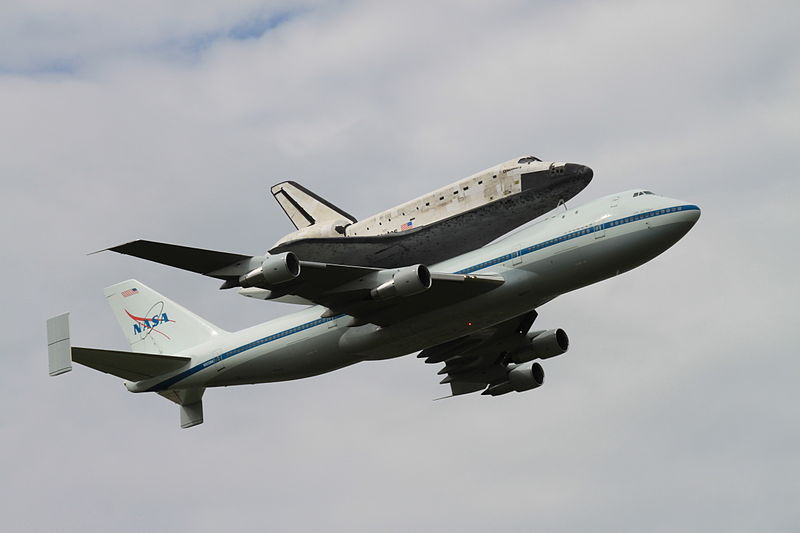
3. Space Shuttle Program Ends and SpaceX Takes Up the Challenge

 
With the space shuttle program going into retirement and the various shuttles being delivered to museums around the country, SpaceX launched the first commercial craft to dock with the International Space Station.

SpaceX's Dragon spacecraft delivered a load of cargo to the ISS on May 25, 2012. This pushes the potential of commercially designed spacecraft beyond just the realm of wealthy and imaginative corporations and fully into reality. While some are still concerned about privatizing space travel, I see it as the next logical step in technology.

SpaceX's Dragon capsule was successfully recovered after landing in the Pacific Ocean on May 31st. It is now approved to re-supply the ISS as needed, and has already been back to the ISS as of October of this year.

With this successful year of missions behind it, a variant of the Dragon is likely to be developed to deliver supplies to Mars in advance of a proposed (and once again, privatized) human visit down the line. I'm keeping a watchful eye on all of this, because I wouldn't be surprised at all if they succeed in this next step.


2. Higgs Boson Found!


No 2012 Top Science Stories list is complete without a nod of the head to CERN and their long-awaited discovery of the Higgs boson particle.

Announced on July 4th, 2012, CERN revealed that two different studies both identified a particle that matches what the Higgs boson should be. However, for the time being, CERN is careful not to say that it's definitively the Higgs boson, just in case something odd pops up. Once again, a great example of science testing and retesting itself to be as sure as possible.

This discovery is a huge deal, because the Higgs boson is responsible for the existence of mass as we know it. It's a particle of the standard model of physics that had yet to ever be observed, but has been predicted to exist for 50 years. This thing needs to exist for modern physics to make any sense.

Because of its extreme importance to physics, the Higgs boson discovery ranks high on my Top 5 list. However, to me personally, it still can't beat out my number one:


1. Curiosity Lands on Mars in a TOTALLY AWESOME WAY


As should be no surprise to my readers, Curiosity's successful landing on Mars tops my list of awesome science stories of 2012. Not only was this landing the most badass way to land a robot on Mars, it also happened on my birthday (in my timezone) and was the very first time I watched something this spectacularly epic happen. My generation missed all the moon landings, so for me, this is it. The coolest thing I've ever got to watch NASA do.

Since her landing, she's found amazing new evidence of water on Mars and even hints of organics. Curiosity is there to look for signs of life, and so far, is beautifully doing exactly what she was built to do. She's a technological achievement like none we've had before, and NASA has already announced that its next rover will be based off of Curiosity's design. This resounding success is not only providing us with amazing science, but has once again sparked the interest and adoration of adults and children in regards to space exploration.

As a science educator, I can't NOT love everything about Curiosity. And with Curiosity already reporting some pretty interesting and surprising discoveries in her first few months, I can't wait to see what she teaches us in 2013.

Happy New Year! And here's to a 2013 filled with even more amazing science!